Written by:
Jacksons Moving
Published:
July 13, 2026
Learn how to pack for a move the right way with our room-by-room packing guide. Tips on supplies, fragile items, labeling, and saving time on moving day.
Knowing how to pack for a move efficiently can save you hours of frustration, prevent damage to your belongings, and make unpacking at your new home dramatically easier. Packing is one of those tasks that most people underestimate — it almost always takes longer than expected, requires more supplies than you planned for, and can unravel quickly without a clear strategy. Whether you're moving out of a studio apartment or a large family home, this room-by-room guide will walk you through everything you need to know to pack smarter.
Start reading this guide at least four to six weeks before your move date, gather your supplies early, and work through each room systematically. A methodical approach is the single biggest predictor of a smooth moving day.
Running out of boxes mid-pack or using the wrong materials can set your entire timeline back. Before you tape a single box shut, make sure you have everything on hand. Here's what you'll need for most moves:
You can source boxes from hardware stores, moving companies, or free from local buy-nothing groups and grocery stores. If you'd rather skip the packing stress entirely, professional packing services handle all of this for you — supplies included.
Most people are surprised to discover that the kitchen takes more time and more boxes than any other room in the house. Between dishes, glassware, appliances, pantry items, and cookware, a well-stocked kitchen can easily fill 15 to 25 boxes. Give yourself more time here than you think you need.
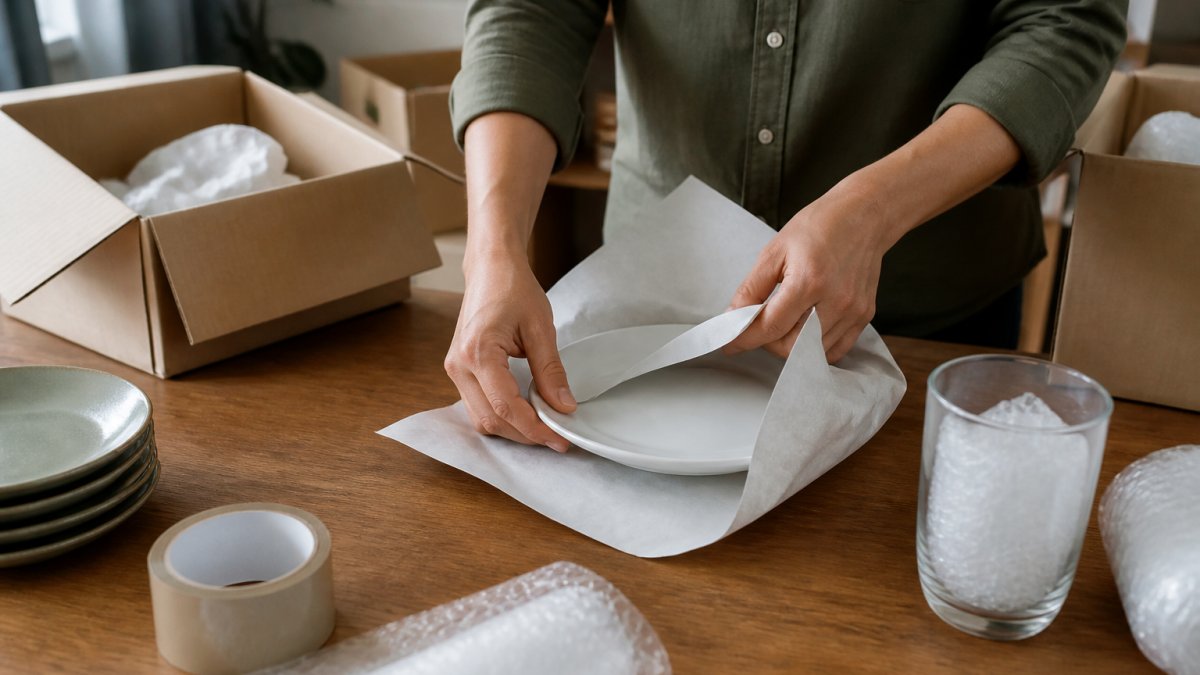
Dishes and glassware are the most commonly broken items in any move. Pack each plate individually in packing paper, standing them on their edges vertically in the box rather than stacking them flat — vertical orientation distributes pressure more evenly and dramatically reduces the chance of breakage. Wrap each glass in a full sheet of paper, stuff crumpled paper inside the cup, and nest wrapped glasses together. Fill every gap in the box with crumpled paper or foam peanuts so nothing shifts in transit. Mark these boxes "FRAGILE — THIS SIDE UP" on all four sides and the top.
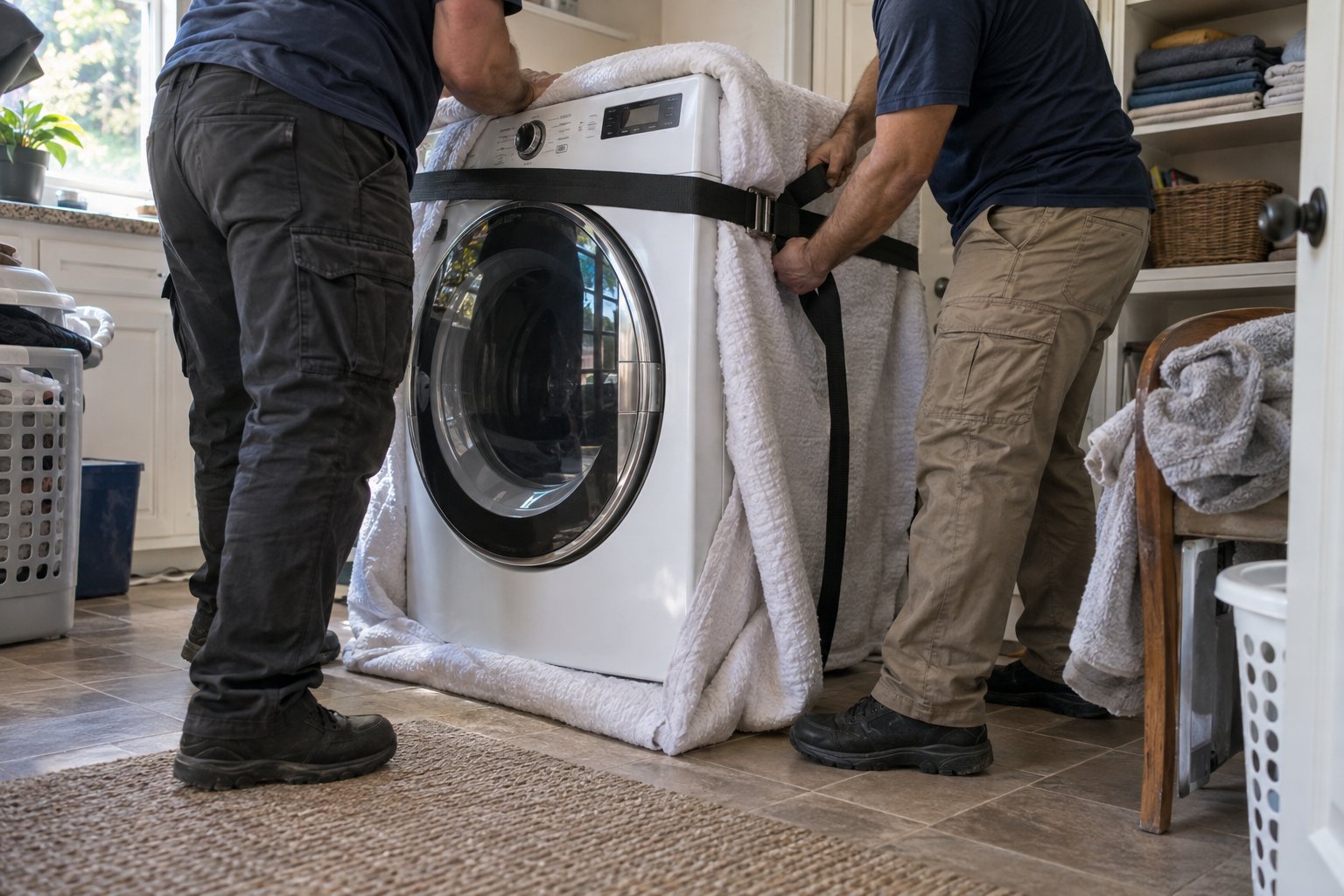
Use the original packaging when you have it — it's designed to protect the appliance perfectly. When you don't, wrap appliances in packing paper or bubble wrap and place them in appropriately sized boxes with padding on all sides. Cast iron and other heavy cookware should go in small boxes to keep weight manageable for movers. Large pots can be filled with soft kitchen items like dish towels to make efficient use of space.
Plan to use up or donate perishable pantry items in the weeks leading up to your move. Non-perishables that are coming with you should be packed in smaller boxes — canned goods get heavy fast. Seal open packages in zip bags before boxing them. Liquids like oils and condiments should be sealed with tape around the cap and placed upright in a box lined with a plastic bag in case of leaks.
Bedrooms are generally more straightforward than kitchens, but there are still some packing choices that will save you significant time on both ends of the move.
Wardrobe boxes let you transfer hanging clothes directly from your closet rod to the box without folding — and hang them right back up at the new place. For folded clothes, drawers themselves can often serve as packing containers: simply remove the drawer from the dresser, wrap the clothing inside with plastic wrap, and your movers can carry the drawer and its contents together. Linens, towels, and blankets make excellent padding material — use them to wrap fragile items or fill empty gaps in boxes instead of buying extra packing paper.
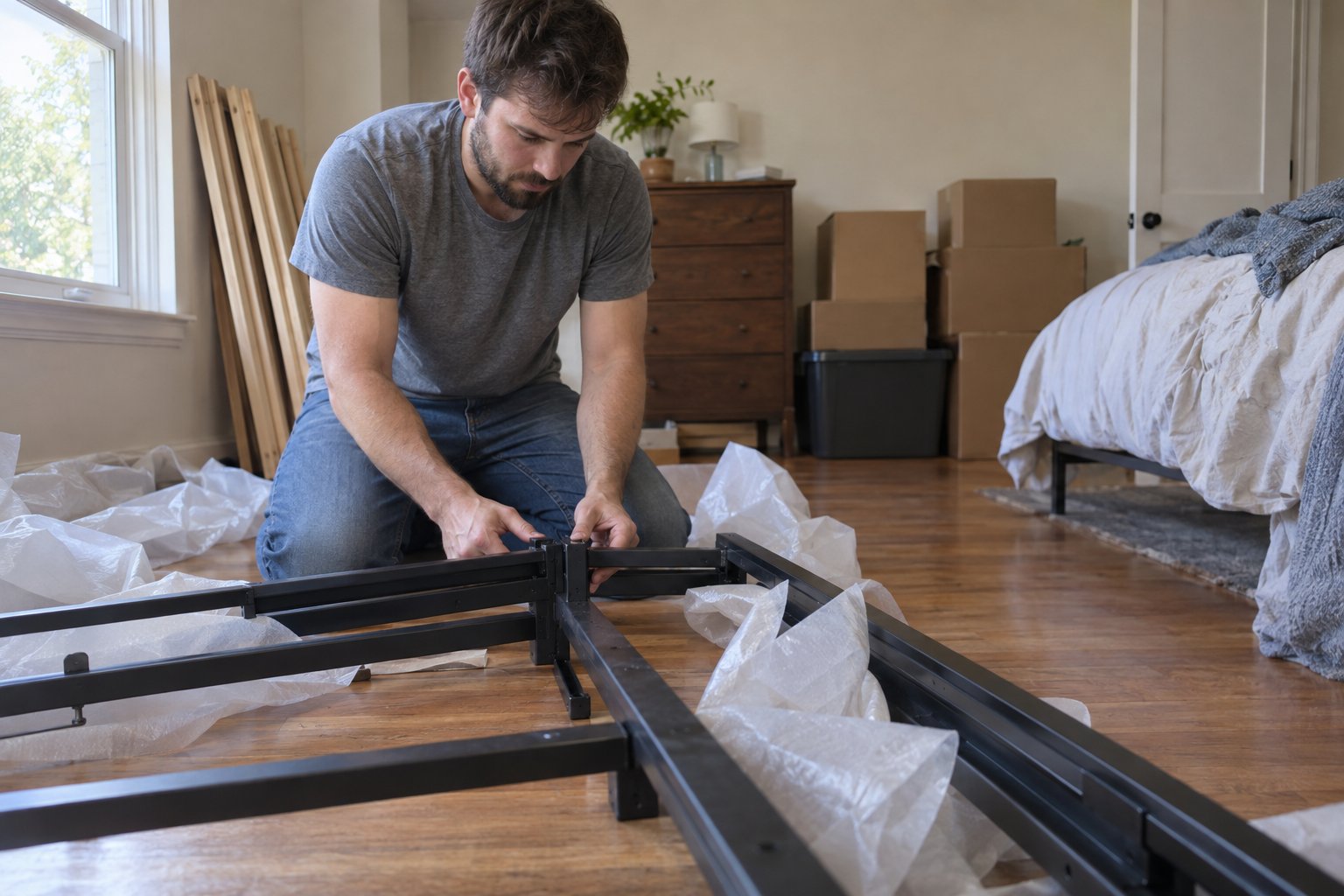
Mattresses should always be covered in a mattress bag or plastic wrap before being moved — even for short distances. They pick up dirt and moisture quickly in a moving truck. Disassemble bed frames the night before the move, keeping all hardware (bolts, screws, slats) in clearly labeled zip bags taped directly to the frame. Take photos of the frame assembled before you dismantle it so reassembly at the new place is straightforward.
Jewelry, important documents, heirlooms, and high-value electronics should travel with you personally rather than in the moving truck. Set aside a "do not load" bag or box early and keep it separate. Documents like passports, birth certificates, insurance papers, and financial records are safest in a fireproof document bag you carry with you on moving day.
Living rooms and family rooms contain some of your most valuable and most awkward-to-pack items — large electronics, artwork, fragile décor, and oversized furniture.
Photograph the back of every entertainment setup and computer workstation before unplugging a single cord. This saves considerable frustration when reconnecting everything. Use the original boxes for televisions if you still have them; otherwise, flat-screen TV boxes are available at most moving supply stores. Coil cords neatly, secure them with a twist tie or velcro strap, and label each cord with a piece of tape marking what it belongs to. Place all cords and remotes in clearly labeled zip bags.
Picture frame corners are the most common casualties in a move. Use foam corner protectors and wrap each piece in bubble wrap before placing it in a mirror box or a flat box lined with cardboard. Stand framed artwork vertically, never flat, and never stack other items on top. Mark the box "FRAGILE — DO NOT LAY FLAT."
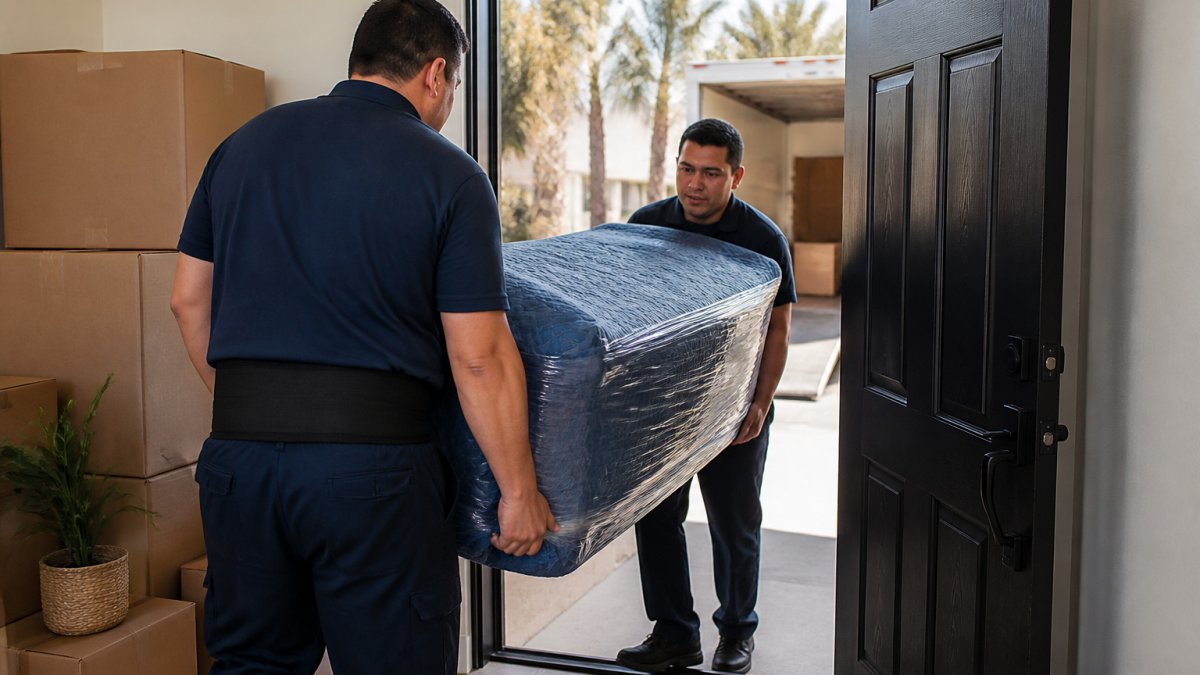
Most large furniture — sofas, bookcases, dining tables, and dressers — doesn't go in boxes at all. Wrap legs and edges with moving blankets or stretch wrap to prevent scratches and dings during loading. Remove table legs when possible to reduce the footprint and make navigating doorways and stairwells easier. If you're moving a large home with significant furniture, a dedicated furniture moving service ensures your pieces are protected and handled by people who do this every day.
Bathrooms are quick to pack but easy to forget. Start with items you use least frequently and leave daily essentials — toothbrushes, medications, soap — accessible until the very last moment before you load out.
Liquids are the main hazard in bathroom packing. Tape or rubber-band lids shut, and then place bottles upright in zip bags before packing. If a shampoo bottle leaks inside a box, it can damage everything else. Medicines should be sorted before packing: dispose of expired medications properly and consider whether you really need to move a half-empty bottle of cough syrup. Medications you take regularly should travel with you personally.
Cleaning supplies and chemicals should never be boxed with anything else. They belong in a separate, clearly labeled box — and some chemicals (like certain cleaners or aerosols) may not be transported in a moving truck at all. Check with your moving company about hazardous materials policies before you pack these items.
A box that isn't labeled clearly is a box you'll be digging through at 10 p.m. looking for your phone charger. Take labeling seriously — it takes seconds per box and pays off enormously at the other end.
Mark every box on at least two sides and the top with:
Color-coded tape by room is an optional upgrade that makes directing movers even faster — your crew can place every box in the correct room without asking a single question.
Packing inevitably surfaces things you no longer want or need. Don't let unwanted items slow down your packing momentum or end up taking up space in your new home by default. Separate them into three categories as you go: donate, sell, and dispose.
For furniture, appliances, or large items you've decided to leave behind, scheduling a junk removal service before your move date clears the space and makes packing the rest of your home faster and less cluttered. Many junk removal companies will also haul away items that donation centers won't accept.
For items in good condition, Facebook Marketplace, OfferUp, and local Buy Nothing groups are excellent options. Start listing sellable items as soon as you know you're moving — the more lead time you have, the better your chances of finding buyers before your move date.
Read genuine feedback from our satisfied customers to understand why we are the trusted choice for moving services.
From Phoenix to communities across the Valley, Jackson's Moving is here when you need residential, commercial, or long-distance moving services. Request your free quote today.