Written by:
Jacksons Moving
Published:
September 24, 2026
Learn how to move houseplants safely, from prepping pots to surviving Arizona heat in transit, so your plants arrive healthy at your new home.
If you have ever watched a favorite fiddle-leaf fig drop half its leaves after a move, you already know houseplants do not travel like the rest of your belongings. Learning how to move houseplants safely means protecting roots from shock, leaves from sun and wind, and pots from tipping over, all while working around the fact that most moving trucks are not a plant-friendly environment. With a little planning, though, most houseplants can make the trip and settle back into their normal routine within a couple of weeks.
This guide covers how to prep your plants before moving day, how to pack and transport them, and how to help them recover once they are in your new home, with a few notes specific to moving through the Phoenix-area heat.
Plants are living things that react to temperature swings, light changes, and physical jostling in ways a bookshelf never will. A plant that looks fine on moving day can drop leaves or wilt over the following week simply because its roots were disturbed or it sat in a hot truck for a few hours.
Because of this, plants generally travel best in a personal vehicle rather than inside a moving truck. Most professional movers will not transport houseplants at all, since trucks can reach damaging temperatures and plants can tip, spill soil, or attract pests in a truck full of packed boxes. If you are working with a moving company, ask ahead of time what their plant policy is so you are not scrambling to make other arrangements the morning of the move.
Preparing plants a week or two ahead of moving day gives them time to adjust and reduces the shock of the move itself. The main steps are trimming, checking for pests, and getting plants into moving-friendly pots.
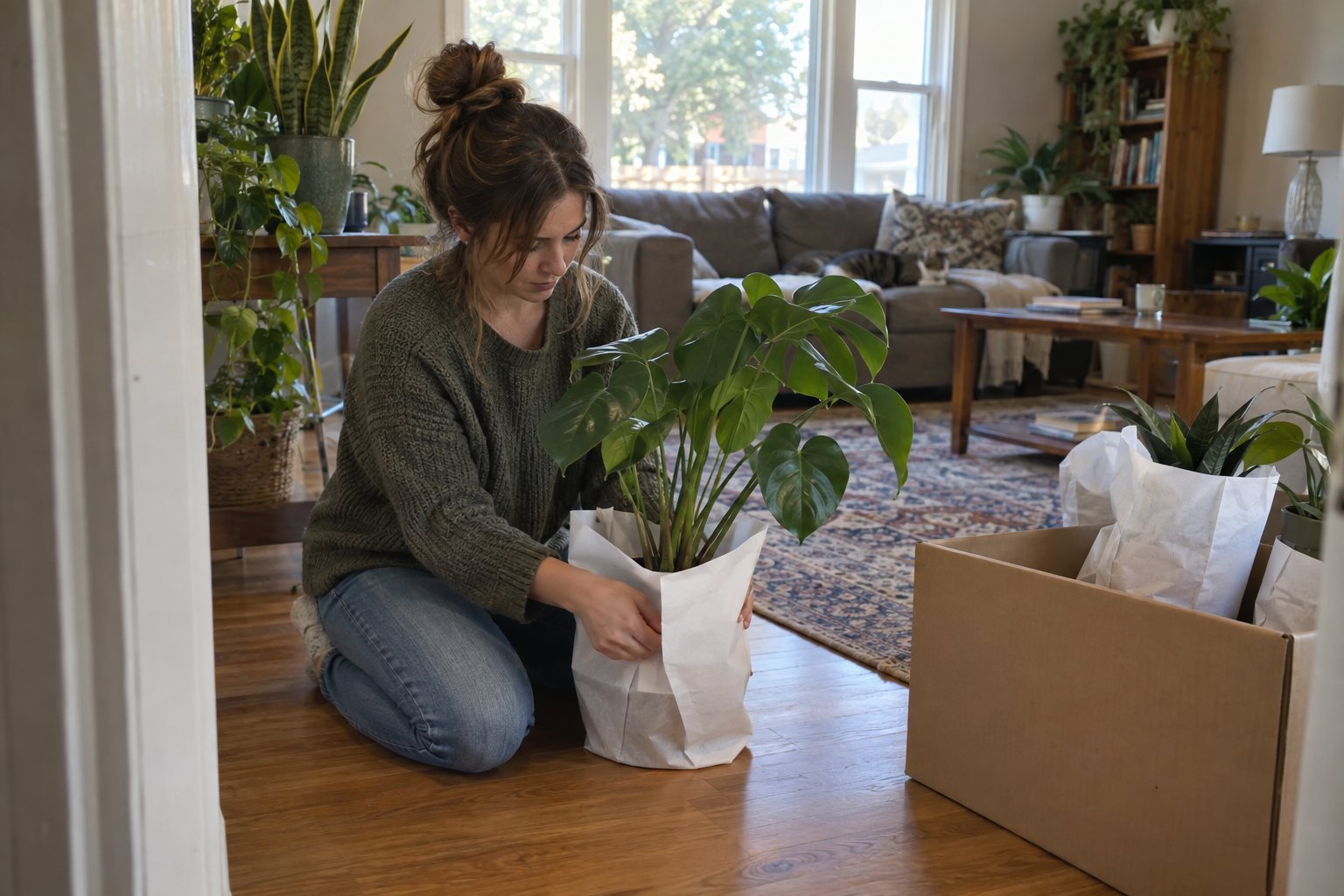
The best way to pack plants for moving day is to keep them upright, contained, and easy to load last and unload first. Boxes with holes cut for airflow work well for small to medium plants, while larger plants may need to simply ride secured on the vehicle floor.
Place each pot inside a sturdy box sized just a bit larger than the plant, then cut or poke a few holes near the top for air circulation. Secure the pot in place with crumpled paper or packing material so it cannot shift, and leave the top of the box open or only loosely closed so leaves are not crushed.
Larger plants often do better unboxed. Set them in a sturdy tray or shallow bin to catch soil and water, and use towels or moving blankets to wedge them in place so they stay upright during transport. Keep tall plants away from windows where branches could rub against glass or get sunburned through the glass.
Plants should be among the last items loaded into your vehicle and the first things unloaded at your new home. This limits the amount of time they spend in a closed, non-climate-controlled space, which matters a lot more than most people expect once you factor in Arizona temperatures.
Heat is the single biggest threat to houseplants moving through the Phoenix area, since a closed car or truck bed can climb well past outdoor temperatures within minutes. Even a short stop at a gas station on a hot afternoon can be enough to stress or damage sensitive plants.
Keep plants in the air-conditioned cabin of your vehicle rather than the trunk or a truck bed whenever possible. If you are moving during the hottest stretch of the year, try to schedule the drive for early morning or evening, and avoid leaving plants in a parked, closed vehicle for more than a few minutes. Direct sun through a car window can also scorch leaves that were previously living in indirect indoor light, so a light towel or sheer cloth draped over the plant during transit can help.
Most houseplants need one to three weeks to fully adjust after a move, and some leaf drop or drooping during that window is normal rather than a sign something went permanently wrong. The goal right after unloading is to give the plant stable conditions and then leave it alone as much as possible.
Unpack plants first, before boxes and furniture, and place them somewhere with indirect light rather than a sunny window right away. Water only if the soil is actually dry, since overwatering a stressed plant is a common mistake. Hold off on fertilizing for a few weeks, since a recovering plant is not in a good position to use the extra nutrients. If you are still unpacking the rest of the house, our room-by-room packing guide can help you sequence the rest of the unpacking so plants are not competing with boxes for space and light.
Since plants usually need to ride with you personally, it frees up real peace of mind to have the rest of your household handled by a moving crew you trust. This is especially true for larger homes where furniture, boxes, and specialty items all need to be packed, loaded, and transported carefully on the same day you are also trying to keep a fiddle-leaf fig alive in the front seat.
If your plant collection includes larger potted trees or awkward planters that will not fit in a personal vehicle, ask about furniture moving services for oversized or heavy items, since the same careful handling techniques used for furniture often apply to large planters too. And if fragile items like glass terrariums or ceramic pots are part of the move, professional packing services can wrap and cushion them properly so they survive the ride alongside your other belongings.
Homeowners across Chandler and the surrounding Valley often ask us about plant-friendly move timing during the hottest months. If you are relocating in that area, our Chandler moving company team can help you plan a move schedule that keeps both your plants and your belongings out of the peak afternoon heat.
Ready to get the rest of your move handled? Get a moving quote and we will help you build a timeline that works for your whole household, plants included.
Most moving companies will not transport houseplants in the truck, since trucks can get extremely hot, plants can tip and spill soil, and they are not part of a standard household goods policy. Plan to transport plants yourself in an air-conditioned vehicle, and confirm your mover's specific policy ahead of time.
For long drives, keep plants in the cabin of the vehicle rather than a trunk, water lightly before departure, and stop periodically to give plants light and airflow. Very long moves may require researching a local plant sitter or nursery to hold sensitive plants temporarily rather than risking days in transit.
Water lightly a day or two before the move rather than right before loading. Soil that is slightly moist travels better than soil that is bone dry or soaking wet, and wet soil is more likely to spill or grow mold inside a closed box or vehicle.
Yes, some leaf drop, drooping, or slowed growth is a normal reaction to the temperature and light changes involved in a move. Most plants recover within one to three weeks once they settle into stable light and watering conditions in the new home.
Early morning or evening is best when moving through hot climates, since midday heat inside a closed vehicle can quickly exceed safe temperatures for most houseplants. Avoid leaving plants unattended in a parked car during the hottest part of the day.
Read genuine feedback from our satisfied customers to understand why we are the trusted choice for moving services.
From Phoenix to communities across the Valley, Jackson's Moving is here when you need residential, commercial, or long-distance moving services. Request your free quote today.