
Written by:
Editorial Team
Published:
November 19, 2026
How to prepare furniture for long-distance moving differs from a local move. Compare wrapping, disassembly, and loading steps for each to protect your pieces.
How to prepare furniture for long-distance moving comes down to three things a local move doesn't demand nearly as much: full disassembly of anything with joints, padding that survives hours on a truck instead of minutes in a driveway, and a loading plan that assumes your furniture will shift during the trip. A short move across town can get away with shortcuts. A move that spends a day or more on the road cannot. Here is how preparing furniture for each distance actually differs, and which steps matter most depending on which one you're facing.
Distance changes preparation because it changes how long your furniture sits loaded, how many times it's handled, and how much vibration and temperature change it absorbs along the way. A local move might have your furniture on a truck for under an hour. A long-distance move can mean a full day or more of highway vibration, stops, and transfers, sometimes with other shipments loaded around yours.
That longer window is why the same dresser needs a different level of prep depending on where it's headed. A furniture pad that's enough to stop a scuff during a short drive isn't enough to stop a joint from working loose over hundreds of miles.
For a local move, you can often leave larger furniture assembled if it fits through doorways and the truck isn't making multiple trips. For a long-distance move, take apart anything with legs, a headboard, or a glass top, because the extended vibration works screws and brackets loose in ways a short ride usually doesn't.
Beds, dining tables, and bookshelves are the usual candidates. Remove legs from sofas and tables where they detach, take headboards off bed frames, and pull any glass insert or shelf free of its frame. Bag the hardware for each piece separately and tape the bag to the matching piece, or tape it to the inside of a drawer, so it travels with the furniture it belongs to instead of in one box of mixed screws.
If you'd rather not handle disassembly yourself, taking apart and reassembling standard furniture like beds and tables is something furniture moving can include as part of the move.
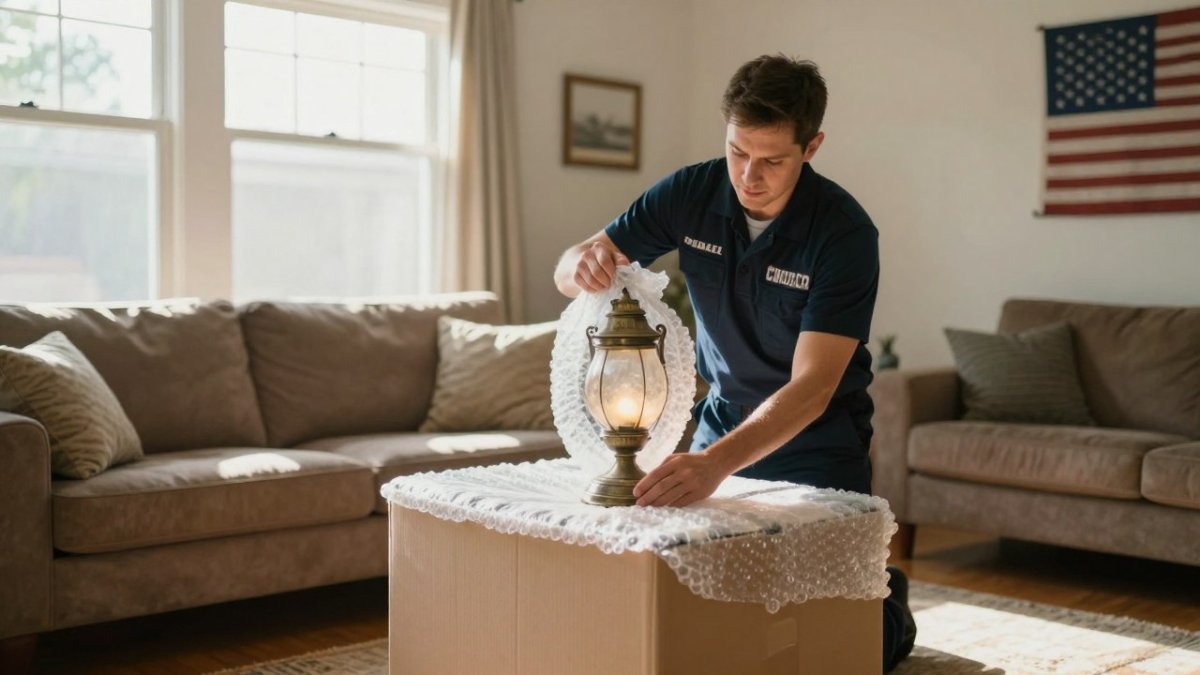
Long-distance furniture needs a full wrap: moving blankets held with stretch wrap or tape on the wrap (never directly on wood or upholstery), corner protectors on anything with sharp edges, and plastic wrap over upholstered pieces to guard against dust and moisture during a multi-day trip. A local move can often get by with blankets alone, since the exposure time is so much shorter.
For wood furniture heading long distance, wrap each piece in a moving blanket first, then secure the blanket with stretch wrap rather than tape, since tape residue can damage finishes if it shifts in transit heat. Wrap legs and corners separately before wrapping the whole piece, since those points take the most impact when furniture settles or shifts over hours on the road.
Glass tabletops and mirrors should travel flat in a dedicated crate or upright in a specialty box with cardboard on both faces, never loose against other furniture. For a short local trip these can sometimes ride safely wrapped in a blanket between soft items, but a long haul calls for more rigid protection since there's more time for anything loose to work its way into contact with them.
Furniture for a long-distance trip should load heaviest and most stable pieces first, flat against the truck wall, with weight distributed evenly rather than stacked to one side. The goal is a load that won't shift even if the truck brakes hard or takes miles of uneven road, which matters far less for a 20-minute local drive.
Load large case pieces like dressers and bookshelves along the walls first, standing upright rather than flat where possible, since furniture is generally sturdier in the orientation it was built to stand in. Fill the gaps between large pieces with boxes and soft items to stop empty space where things can slide. Use rope or tie-down straps to secure rows of furniture to the truck's built-in rails if it has them. Mattresses and sofas go last against a wall or upright with cardboard protection, loaded so nothing heavy can lean into them during the trip.
Upholstered furniture, anything with electronics, and furniture with marble or stone elements need extra prep for a long-distance move because they're more sensitive to vibration and climate changes over a multi-day trip than a short one. Recliners and sofa sleepers should have their mechanisms taped shut so they don't shift open and strain a hinge. Marble tabletops should be wrapped separately from their base and never stacked under other weight, since the stone can crack under pressure it would tolerate fine sitting still.
As a rule of thumb, plan on roughly a day of prep time for every room of furniture that needs full disassembly and wrapping for a long-distance move, more if pieces have glass, marble, or mechanical parts. That's a rough planning figure, not a guarantee, since a single oversized sectional can take as long as an entire bedroom set.
If you're moving a large household long distance, long-distance moving service can cover disassembly, wrapping, and loading as part of the move rather than leaving it to a single prep day. For guidance specific to your route and timeline, the moving day timeline guide walks through how prep work fits around the rest of a move.
Furniture prep protects your home the same way regardless of distance, since a dresser can scrape a wall or gouge a floor just as easily on a short carry as a long one. Felt pads under legs, floor runners in hallways, and door-frame padding are worth using on any move, local or long-distance.
The difference is timing: on a local move you're usually protecting the path for a single loading pass, while on a long-distance move you may be protecting it through a longer packing period as furniture gets staged and wrapped over a day or two before the truck ever arrives. For more on this, see how to move furniture without damaging floors and walls.
For most households, the right approach is simple: match your prep effort to your furniture's actual travel time, not to how much furniture you have. A studio apartment moving across the country needs the full long-distance treatment on every disassembled piece. A four-bedroom house moving twenty minutes away can often skip full disassembly and heavy crating, as long as the drive and the unloading plan are both short.
If you're relocating from the Phoenix area to another state, the FMCSA's Protect Your Move resource is worth a look for understanding your rights and responsibilities on an interstate move, separate from the furniture prep itself. Whether you're coordinating a move from Chandler, AZ or Mesa, AZ, the prep work scales with the trip, not the city.
When in doubt about a specific piece, a quote from a mover who can look at your actual furniture list will tell you more than a general guide can.
Planning your move? Request a quote from Jackson's Moving.
Remove legs on any furniture where they detach, including sofas, beds, and tables, before a long-distance move. The extended vibration of a multi-day trip works screws and brackets loose far more than a short local drive does, and detached legs are easier to pad and brace separately.
Start preparing furniture at least a few days before a long-distance move, giving yourself roughly a day per room that needs disassembly and wrapping. Pieces with glass, marble, or mechanical parts can take longer, so start with those first.
Avoid putting tape directly on wood or upholstery, since it can pull off finish or leave residue, especially after hours in a warm truck. Wrap the piece in a moving blanket first, then secure the blanket with stretch wrap instead of taping it to the furniture itself.
Point out any furniture with glass, marble, electronics, or reclining mechanisms before loading begins, and mention which pieces were recently disassembled. That lets the crew plan padding and loading order around the pieces that need it most.
Furniture headed for a long-distance move needs wrapping that holds up to vibration and handling in transit, while furniture going into storage needs protection against dust and sitting still for an extended period. Both benefit from full wrapping, but a long-distance move also needs everything secured so it won't shift during the drive.
Read genuine feedback from our satisfied customers to understand why we are the trusted choice for moving services.
From Phoenix to communities across the Valley, Jackson's Moving is here when you need residential, commercial, or long-distance moving services. Request your free quote today.