Written by:
Jacksons Moving
Published:
July 20, 2026
Learn how to move heavy furniture safely without scratching floors or scuffing walls. Expert tips from Jacksons Moving to protect your home during a move.
One of the most overlooked challenges of any move is figuring out how to move furniture without damaging floors, walls, or doorframes in the process. It's easy to focus on getting everything packed and loaded — but one wrong angle on a heavy sofa, one unprotected hardwood floor, or one tight corner can leave behind scratches, gouges, and scuff marks that are expensive to repair. Whether you're moving out of a home you own or returning a rental, protecting your surfaces matters.
This guide walks you through the right tools, techniques, and habits professional movers rely on to keep furniture and your home's interior surfaces in pristine condition from start to finish.
Just like packing, furniture moving rewards preparation. Showing up without the right protective materials is one of the most common reasons floors get scratched and walls get scuffed. Before you move a single piece, gather the following:
If you'd rather leave the heavy lifting and surface protection entirely to trained professionals, furniture moving services from Jacksons Moving include all necessary padding, equipment, and floor protection as part of the job.
A few minutes of prep work at the start of your move can save you hours of repair work afterward. Before you bring any furniture into the hallways, take these steps to protect your surfaces.
Hardwood floors are particularly vulnerable to scratches from furniture legs, grit tracked in on shoes, and the repeated friction of boxes sliding across the surface. Lay down rosin paper, Ram Board, or sheets of plywood along any high-traffic path between rooms and out to the moving truck. Secure edges with painter's tape so no one trips. Avoid sliding furniture directly on hardwood — always use felt sliders or lift completely.
Carpet is more forgiving of dents and compression than hardwood, but heavy furniture dragged across carpet can tear fibers or leave permanent marks. Use hard plastic furniture sliders under legs to glide pieces smoothly, and use a furniture dolly for anything especially heavy. Roll furniture on a dolly rather than dragging it.
Doorframes are the single most common casualty of a DIY furniture move. A sofa or mattress tilted at the wrong angle will gouge wood trim or crack drywall. Before you start, attach foam corner guards or wrap doorframe edges with moving blankets held in place with painter's tape. Walk every planned route with fresh eyes and note where tight turns will occur — these are the high-risk zones.
The simplest way to move large furniture without damaging anything is to make it smaller. Disassembling furniture before your move reduces both the size and weight of each piece, makes it easier to navigate tight corners, and dramatically reduces the chance of a wall collision.
Keep hardware organized. For every item you disassemble, put all screws, bolts, and small parts into a clearly labeled resealable bag and tape it directly to the furniture piece it belongs to. You'll thank yourself at reassembly time.
Even with the right equipment, poor technique causes most furniture-related damage — and most moving injuries. Knowing how to lift, angle, and carry large pieces correctly protects both the people doing the work and the surfaces around them.
For sofas and large upholstered items, tilt the piece on its end so it becomes tall and narrow rather than wide and flat. This "hook and carry" orientation lets you maneuver through standard doorways (typically 32–36 inches wide) without forcing the piece through at an awkward angle. Two people should work in tandem — one guiding from the front, one pushing from behind — with constant communication about obstacles and clearances.
Bend at the knees, keep your back straight, and engage your core. Get a solid grip before lifting. Never twist your torso while holding weight — pivot with your feet instead. Rushing or showing off leads to dropped furniture, which causes the most catastrophic floor and wall damage of any move.
Any time you're navigating a corner, staircase, or narrow hallway, have a third person act as a spotter. Their only job is to watch the furniture's path relative to the walls, floors, and doorframes and to call out adjustments in real time. A spotter can prevent the majority of wall and doorframe damage with nothing more than clear, timely communication.
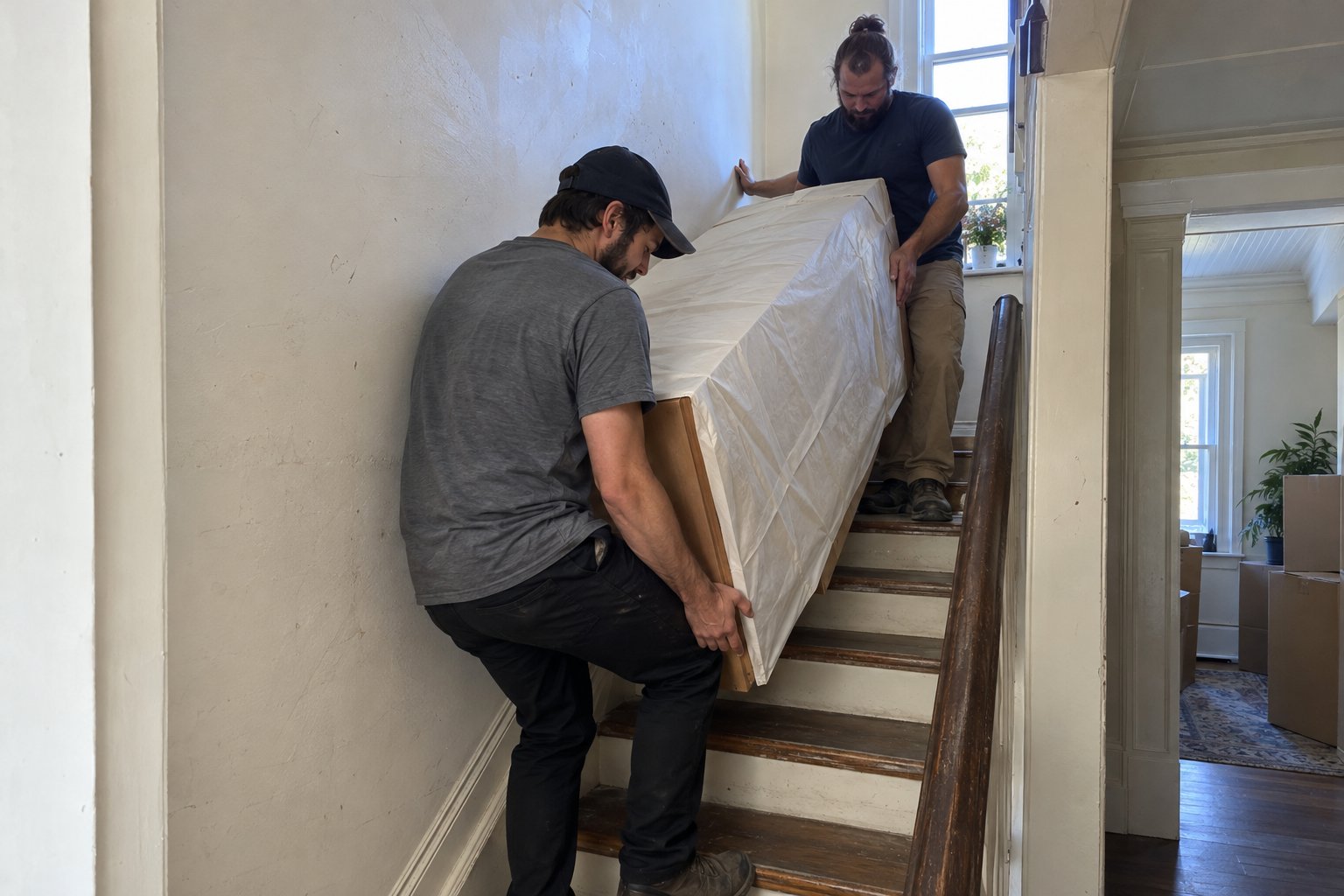
Stairs are where furniture moves get genuinely dangerous. The combination of weight, gravity, awkward angles, and reduced maneuverability creates a high-risk environment for both people and surfaces. If your home has stairs, take extra precautions.
Lay moving blankets or a continuous strip of protective floor covering over stair treads before you bring anything up or down. Secure them with tape at each end so they don't shift underfoot. Protect the stair railing with moving blankets as well — furniture corners are notorious for gouging railing balusters and newel posts.
For large, heavy items like dressers and refrigerators, a two-wheel hand truck with moving straps is far safer than a manual carry. Tilt the item onto the dolly, secure it with straps across the middle, and lean the whole assembly back onto the stair edge. Work in small, controlled steps. The person at the bottom controls the descent; the person at the top guides and stabilizes. Never rush stair work.
Some furniture — grand pianos, large gun safes, oversized sectional sofas — should not be moved by untrained hands on stairs. The risk of injury and damage is simply too high. Professional residential moving teams are trained and equipped specifically for these scenarios, including stair climbing equipment and reinforced carry straps rated for very heavy loads.
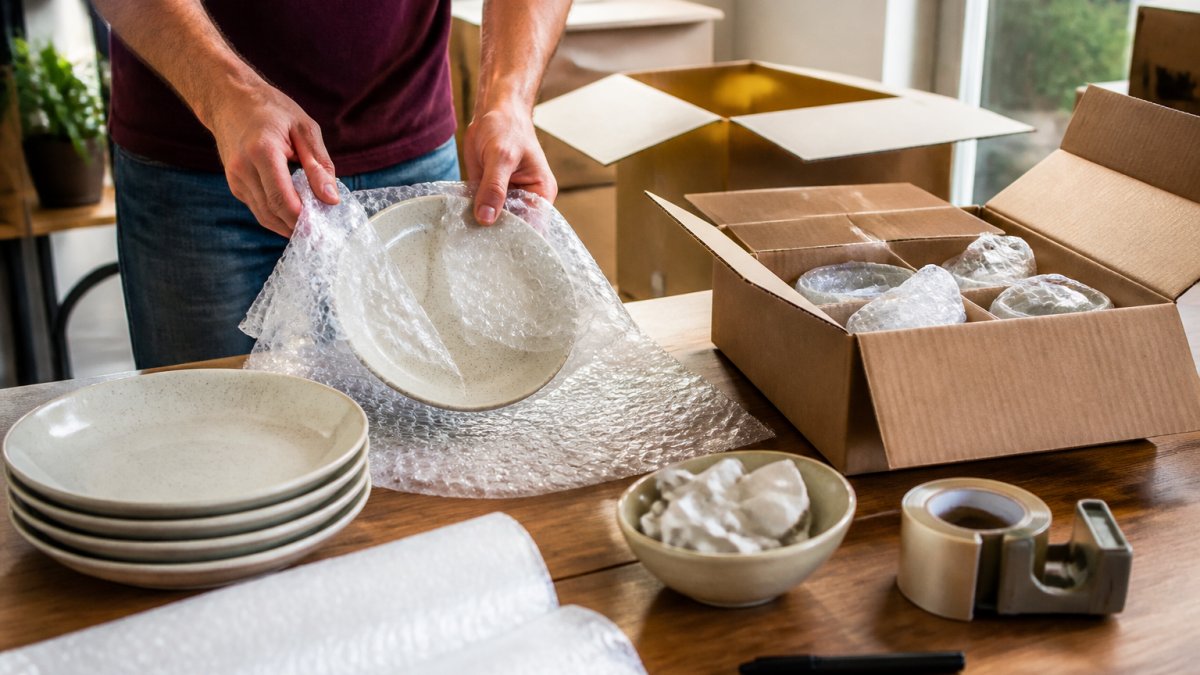
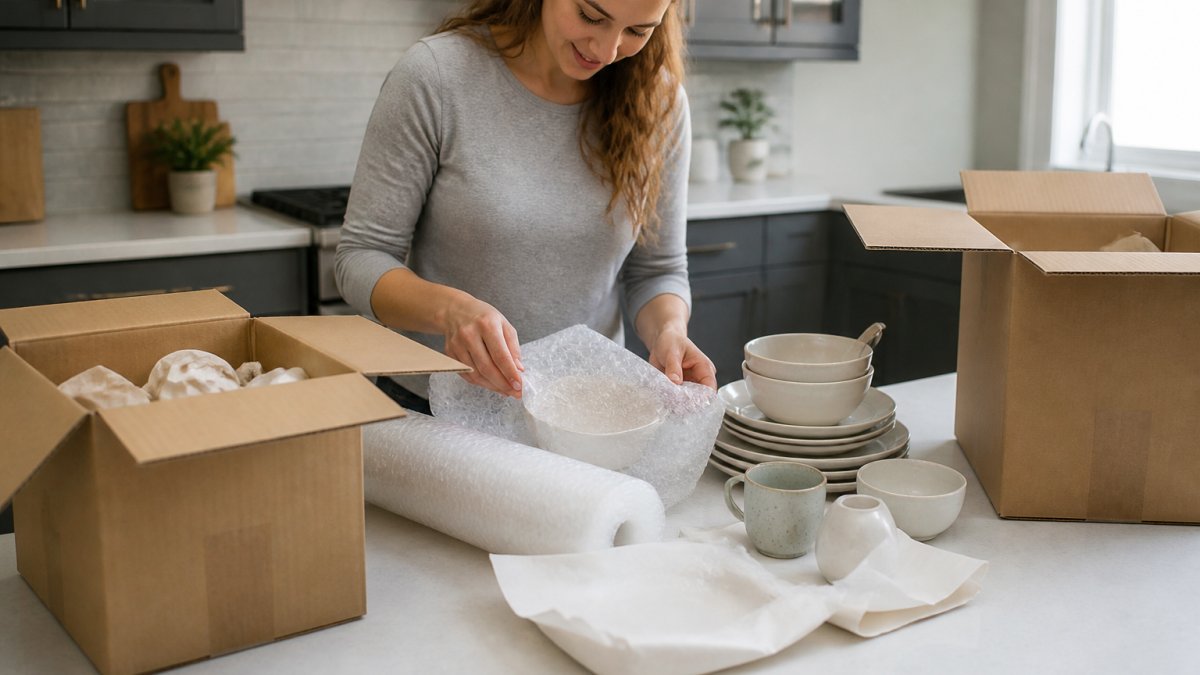
It's easy to focus entirely on protecting the home and forget that the furniture itself needs protection during a move. Scratched wood finishes, torn upholstery, and bent metal frames are common outcomes of unprotected furniture moves.
If you're planning a larger residential move and have multiple rooms of furniture to protect, it may be worth exploring professional packing services that include full furniture wrapping and preparation as part of the package.
Once everything is in the new home, do a walk-through of both the origin and destination properties before you leave. Look carefully at:
If you're moving out of a rental, document the condition of every surface with time-stamped photos before and after. This protects your security deposit and creates a record if any dispute arises. If damage does occur, address it promptly — small scuffs in drywall can often be touched up with spackle and paint, and minor wood floor scratches can be buffed out with the right products before they become larger problems.
Moving furniture safely is part skill, part preparation, and part the right equipment. Whether you're tackling it yourself or bringing in professionals, following these steps will protect your belongings, your home, and everyone doing the heavy lifting.
The best approach is to use felt-bottom furniture sliders placed under each leg or corner of the piece. These allow heavy items to glide smoothly without direct contact between the furniture and the floor surface. For very heavy furniture, lift completely rather than sliding, and lay down a protective floor covering like Ram Board or plywood sheets along the moving path to create a buffer between the floor and foot traffic.
Professional movers typically attach foam corner guards or wrap doorframe edges with moving blankets secured with painter's tape before moving large items through. They also use stretch wrap and furniture pads on every piece of furniture to create a cushion between the item and any surface it might contact. For especially tight corridors, they'll use a spotter to guide clearances in real time and call out adjustments before contact occurs.
Yes, in most cases disassembly makes furniture significantly easier and safer to move. Bed frames, dining tables with removable legs, sectional sofas, and large bookshelves should all be broken down into their smallest manageable components before moving. This reduces the size and weight of each piece, makes navigating doorways and corners far easier, and dramatically lowers the risk of wall and floor damage. Always store hardware in labeled zip bags taped to the furniture piece they belong to.
It depends on the size and weight of the items. Lighter pieces — like nightstands, dining chairs, or small dressers — can typically be carried safely on stairs by two careful people using proper technique. However, very heavy or awkward items like large wardrobes, refrigerators, sleeper sofas, or gun safes present real injury and damage risks on stairs. For those pieces, hiring professional movers with stair-rated equipment and training is strongly recommended.
Act quickly. For minor drywall scuffs or small holes, spackle compound and touch-up paint can address the damage before it worsens. Shallow scratches in hardwood floors can sometimes be buffed out with a wood floor scratch repair product. Deeper gouges in hardwood may require professional refinishing. Document all damage with photos immediately, especially if you're a renter, so you have a clear record of when and how the damage occurred.
Read genuine feedback from our satisfied customers to understand why we are the trusted choice for moving services.
From Phoenix to communities across the Valley, Jackson's Moving is here when you need residential, commercial, or long-distance moving services. Request your free quote today.