
Written by:
Jacksons Moving
Published:
October 19, 2026
Learn how to move a gun safe down stairs without injury or damage, including equipment, technique, and when to call in professional movers instead.
Moving a gun safe down stairs is one of the riskiest jobs in a home move. Most gun safes weigh anywhere from 300 to over 1,000 pounds, and that weight is concentrated low in a box with no good grip points. Done wrong, you risk a crushed foot, a cracked stairway wall, or a safe that tumbles the rest of the way down on its own. This guide walks through what actually works, the equipment that makes the difference, and when the smarter move is to stop and bring in extra hands.
A gun safe is harder to move than a dresser or a piano of similar weight because nearly all of its mass sits in a thick steel shell with almost no flex and no easy place to grip. Unlike a couch or a bookshelf, you cannot break a safe down into lighter pieces, tip it onto softer padding, or rely on its frame to absorb a bump. Every pound travels as one rigid, top-heavy block.
On stairs, that combination turns a controlled lift into a controlled fall if you lose your grip even briefly. The safe's low center of gravity actually works against you on an incline, because it wants to pitch forward the moment the angle changes. That is why the standard furniture-moving tricks (sliding blankets, a couple of strong friends, a dolly built for boxes) are not enough on their own.
Weight varies a lot by size and construction, from smaller cabinet-style safes in the low hundreds of pounds to large composite or commercial-grade models well over a thousand pounds. If you do not already know your safe's weight, check the manufacturer's spec sheet or the data plate on the back or inside the door before you plan the move, since that number determines what equipment and how many people you actually need.
You need, at minimum, a rated appliance or safe-moving dolly, a stair-climbing hand truck or set of stair rollers, heavy-duty moving straps, and furniture blankets or pads to protect both the safe and the stairway. Skipping any one of these is usually where things go wrong.
A standard two-wheel hand truck rated for appliances can work for lighter safes on a short, straight staircase, but anything in the 400-pound-plus range is safer on a stair-climbing dolly, which uses a tri-wheel or tracked mechanism to walk down each step instead of relying on people to control the drop. Ratchet straps or shoulder-style moving straps let two or more people share the load through their legs and core instead of their arms and back, which matters as much for avoiding injury as for controlling the safe.
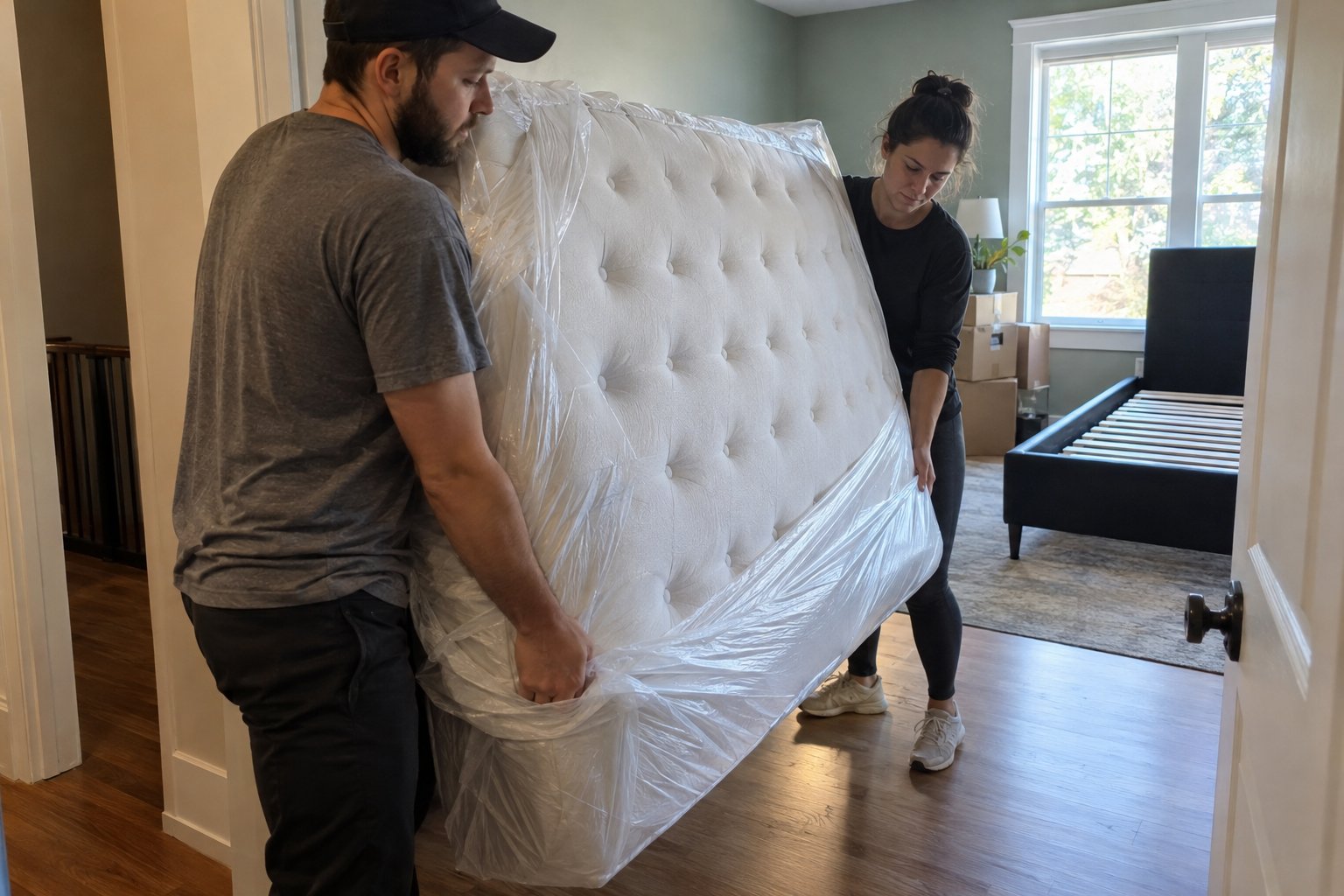
Furniture blankets serve double duty here: they protect the safe's finish from scraping against the dolly frame, and they protect your stair treads, walls, and door frames from gouges if the safe shifts even slightly during the descent.
Moving a lighter gun safe yourself on a short, straight staircase with the right equipment and at least one other capable person can be done, but it carries real risk to your body, your home, and the safe itself, and that risk climbs fast with weight and stairway complexity. A safe that gets away from you on stairs does not just dent a wall, it can pin or crush whoever is below it.
Before attempting it yourself, be honest about a few factors: the safe's actual weight, whether your staircase has turns or landings, how wide the stairway and doorways are, and whether you have people strong enough and experienced enough to control a slow, steady descent rather than just a strong enough group to lift it once. If any of those answers make you hesitate, that hesitation is useful information.
A few red flags mean this is not a DIY job: the safe weighs more than your group can comfortably carry for a short distance on flat ground (stairs are harder, not easier), the staircase has a turn, a narrow landing, or low clearance, or you do not have stair-rated equipment and are considering sliding the safe down on blankets alone. Any one of these on its own is a reason to bring in extra hands rather than improvise.
The safest approach treats the descent as a slow, controlled walk rather than a lift, with one person bracing from below at all times and nobody standing directly beneath the safe's path. Rushing any part of this process is where most injuries and most wall damage happen.
For most heavy, awkward items on a stairway with a turn or tight clearance, bringing in movers experienced with bulky loads is often the safer and faster choice than trying to manage it with a small group of friends. A professional crew brings stair-ready equipment and technique for carrying heavy furniture through tight spaces without it becoming a two-person injury.
If a gun safe is part of a larger move, note that moving a specialty item like a safe through a stairway is a specialized job. Where it does fit our work is the rest of the heavy lifting: Jackson's Moving crews handle furniture moving, including carrying heavy furniture and boxes within the home and protecting floors, walls, and door frames along the way. If you are weighing whether to tackle the heavy items yourself or bring in help for the whole move, our guide on DIY moving versus hiring professional movers walks through how to make that call for your situation.
Whatever you decide about the safe specifically, it is worth protecting the rest of your move too. Scraped walls and dented stair treads are common when heavy items are rushed down a staircase without the right setup, and our guide on how to move furniture without damaging floors or walls covers prep steps that apply just as much to a safe as to a dresser.
If you are relocating and a heavy item like a gun safe is just one piece of a bigger job, it often makes sense to let one crew handle the rest of the move rather than DIY-ing everything separately. Jackson's Moving offers residential moving for homes throughout the Phoenix area, including Mesa, Chandler, Gilbert, and surrounding communities, with crews equipped to carry and protect heavy furniture as part of a standard move.
If you are in the Mesa area specifically, our Mesa moving company page has more on local service details and coverage.
Ready to get a plan in place for moving day? Get a moving quote and let us know about any heavy furniture or boxes so the crew arrives prepared.
It depends on weight, but most gun safes over 300 pounds need at least two to three people working with stair-rated equipment, not just extra hands. More people without the right dolly and straps does not make a steep staircase safer, it just adds more people who could get hurt if the safe shifts.
Furniture sliders are built for flat floors, not stairs, and are not a safe substitute for a stair-climbing dolly or hand truck on a staircase. On an incline, sliders can let a heavy safe gain momentum with nothing to control its speed.
Yes, always remove firearms, ammunition, and valuables before moving a gun safe, both for safety and to reduce the weight you are maneuvering. A full safe is also more likely to shift its center of gravity unexpectedly during a move.
A stair-climbing dolly with a tri-wheel or tracked mechanism, rated for the safe's full weight, works best for descents involving stairs. A standard two-wheel appliance hand truck can handle lighter safes on short, straight staircases but is not built for heavier or turning staircases.
It can, especially to walls, door frames, and stair treads, if the safe shifts, scrapes, or is dragged rather than carried in a controlled descent. Padding the safe and the surrounding surfaces, and moving slowly with someone bracing from below, significantly cuts that risk.
Read genuine feedback from our satisfied customers to understand why we are the trusted choice for moving services.
From Phoenix to communities across the Valley, Jackson's Moving is here when you need residential, commercial, or long-distance moving services. Request your free quote today.