
Written by:
Editorial Team
Published:
October 15, 2026
Last Updated: October 14, 2026
Verifying moving company license details takes about ten minutes and is the best way to avoid a moving nightmare.
A moving company license is an official registration proving a mover has the legal right to haul your household goods.
Here is the hard truth most guides skip: a mover can look professional and still be operating without proper authority.
So you check the registration yourself.
An unlicensed mover has no legal obligation to deliver your belongings on time, or at all.
When something goes wrong, you have almost no recourse. Registered carriers must follow federal consumer protection rules. Unregistered ones simply vanish with your deposit.
The consequences stack up fast:
That last one surprises people: a rogue operator can load your furniture, then demand more money before unloading, illegal for a licensed carrier.
A moving company license lookup starts with two questions: is this an interstate or local move, and where does it begin and end? The answers decide which tool and regulator apply.

For moves across state lines, the federal government keeps the records. For moves inside one state, you check a state agency, if one exists. A meaningful number of states do not license household goods movers at all.
Here is the split in plain terms:
The FMCSA database is the official federal lookup for any mover crossing state lines. FMCSA stands for the Federal Motor Carrier Safety Administration, the U.S.
You can search by company name or by USDOT number. The FMCSA's official mover registration search returns the company's operating authority, safety record, and any administrative action on file.
What to look for:
If the status reads inactive or the name does not match, stop. Do not book.
A database listing is not a safety rating. It is a snapshot of whether a carrier holds operating authority and whether that authority is in force, a starting point, not a verdict.
The status field usually falls into one of a few buckets, and each one means something different:
A common pattern is a company that once held active authority, let it lapse, and keeps advertising as if nothing changed. The status field tells the truth.
State-level license lookup covers moves inside one state. The regulator varies, and so does whether a license exists at all.
Because agency names and structures differ, search your state's transportation or consumer affairs department for a household goods or moving section.
A practical state-by-state verification approach:
For a local move, always confirm both the state registration and the insurance certificate. One without the other tells only half the story.
A broker is not a carrier. A broker arranges your move and hands it to a carrier you may never have heard of.
A common pattern is a broker with a clean record booking your move to a carrier with a poor safety history or lapsed authority.
To verify the full chain:
If a broker will not name the carrier in advance, treat that as a red flag. Legitimate brokers can and do provide this information.
You can check a mover's USDOT number in four steps, and the whole process takes minutes. The USDOT number is a unique ID the federal government assigns to commercial carriers. Here is the workflow we recommend before you sign anything:
If any detail fails to match, treat it as a red flag. A real carrier's records line up. A fake one's do not.
To verify moving company insurance, ask for a certificate of insurance and call the insurer to confirm it is current.
Federal rules require registered interstate carriers to carry liability coverage, which protects you if the mover damages or loses your goods.
But liability coverage and valuation coverage are not the same thing. One is legally required; the other is a choice about how much protection you want.
Liability coverage is the mover's legal responsibility for your goods, setting a baseline for what the carrier must pay if something is lost or damaged.
Valuation coverage is the protection level you choose for your belongings' declared value, beyond the basic legal minimum.
The two work together, but they cover different things:
Ask the mover to explain both in writing. If they cannot, that is a warning sign.
You can tell if a moving company is legitimate by matching its legal name, address, and registration across every document, and understanding why scammers keep those details from lining up.
The most common trick is a name mismatch: the website says one name, the contract another, the carrier a third. That chain is not sloppy paperwork, it is the mechanism, making it harder to identify who has your goods, which regulator to complain to, and who to sue.
Watch for these red flags:
The legal business name must match on every document: the estimate, the contract, and the bill of lading.
Here is a quick identity-matching checklist:
That last item catches a lot of people. If asked to wire money or write a check to a person's name, a different company, or a payment app handle that does not match the legal business name, stop, legitimate carriers accept payment in the company's legal name.
If even one item fails to match, pause. Ask for a written explanation before you pay anything.
This is the scenario most guides skip, and it matters most. If your goods are loaded and the mover demands more money before delivery, you are in a hostage-load situation. Federal rules prohibit this for registered interstate carriers, but that does not stop a rogue operator.
Concrete steps:
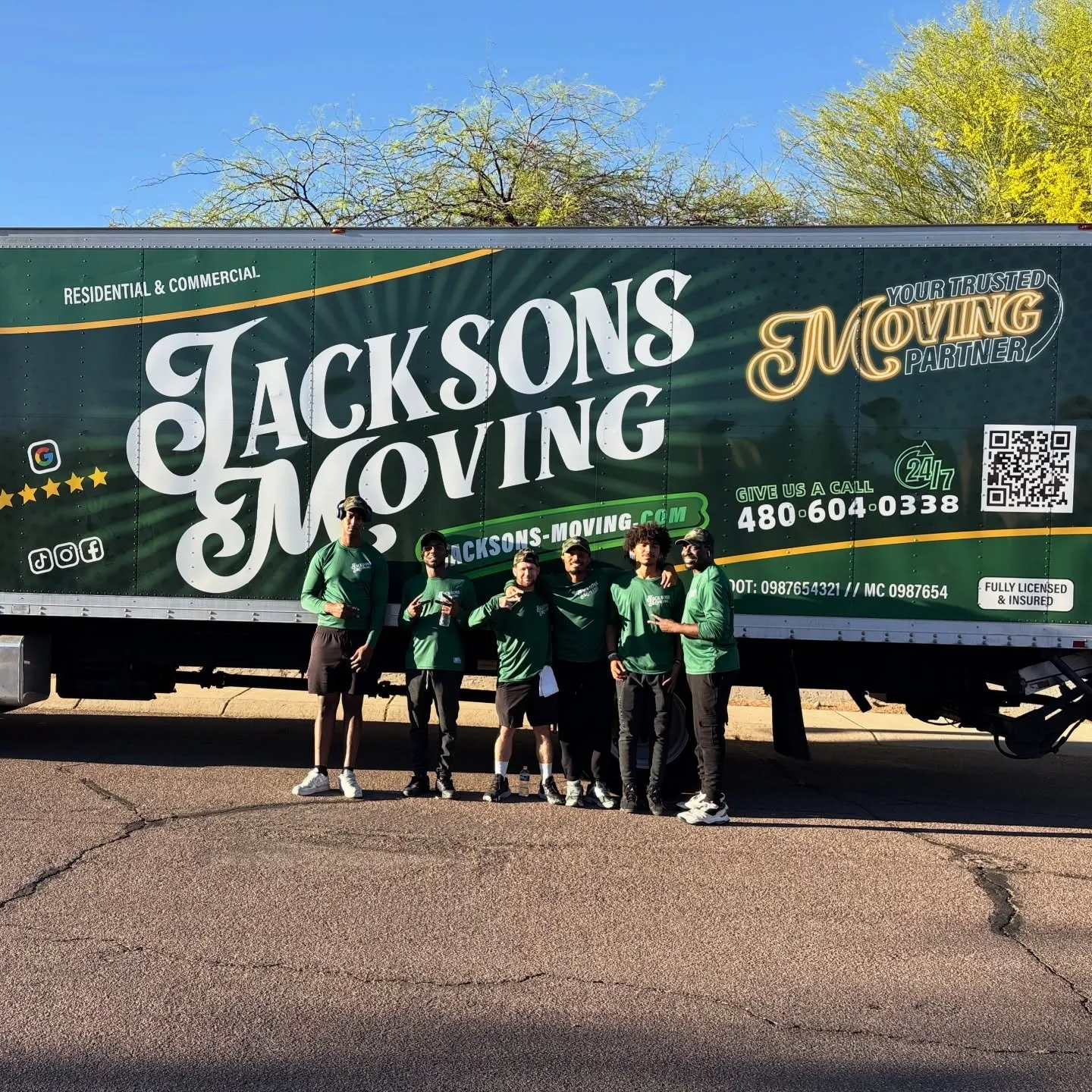
This is exactly why we built our booking process around transparency. Jackson's Moving is family-owned, and we treat every move like our own belongings are on the truck. We give clear, written pricing with no hidden charges, and we are available around the clock when questions come up. If you want a mover you can actually verify before you book, start with our free quote and see the difference.
When license information does not match, stop immediately and do not pay. A mismatch is the clearest signal that something is wrong.
Your next steps:
This is exactly why we built our booking process around transparency.
Verifying a mover's license is not glamorous, but it protects everything you own.
At Jackson's Moving, we make that verification easy. We are family-owned, offer transparent pricing with no hidden charges, and our trained professionals handle your belongings with care.
Start by asking for the company's USDOT and MC numbers, then look them up in the FMCSA database to confirm active operating authority. Check that the legal business name on the registration matches the name on your written estimate and contract. Verify the company carries liability coverage and ask for a certificate of insurance. Finally, confirm a physical business address exists and read recent customer reviews for patterns of complaints or last-minute cancellations.
Yes. Movers handling interstate shipments must hold federal operating authority from the FMCSA and carry a USDOT number. Movers who only perform intrastate moves within a single state are regulated at the state level, and requirements vary. Some states require a specific household goods permit, while others have minimal licensing. If a company claims to handle interstate moves but cannot produce a USDOT number, treat that as a serious red flag and look elsewhere.
Do not sign anything or pay a deposit. Ask the company to explain the discrepancy in writing. If the name on the USDOT registration differs from the name on your estimate, the company may be brokering your move to a subcontractor without disclosing it. Request the actual carrier's name and registration, then verify that entity separately. If the answers are evasive, walk away and hire a different mover.
Ask for a certificate of insurance showing liability coverage and, if applicable, cargo coverage. Call the insurance company directly using the phone number on the certificate, not a number the mover provides, to confirm the policy is active. For interstate moves, federal rules require movers to offer both released-value and full-value protection. Understand that valuation coverage is not the same as liability insurance; it determines how much you are reimbursed if items are lost or damaged.
Read genuine feedback from our satisfied customers to understand why we are the trusted choice for moving services.
From Phoenix to communities across the Valley, Jackson's Moving is here when you need residential, commercial, or long-distance moving services. Request your free quote today.