Written by:
Editorial Team
Published:
October 22, 2026
Last Updated: October 21, 2026
When moving fragile items, the right box is a double-wall corrugated carton sized so packed contents sit within two inches of the top, with no more than a couple inches of empty space on any side.
Here is how boxes are typically sized for a household:
Test every box before you pack it. Press the bottom seam from the inside; if it flexes or the tape lifts, reinforce it or choose another box. Never use a box that has been wet, crushed, or previously loaded, since corrugated board loses rigidity once compressed.
Pro Tip
Write the room and a short contents list on the top and two sides of each box before packing, not after. When boxes get stacked in a truck, the sides are what you can actually read at the destination.
The best packing materials for fragile items combine three jobs: cushioning that absorbs shock, padding that prevents surface scratches, and sealing that keeps the box closed under load. Most households buy only bubble wrap and tape, which leaves two of the three jobs undone.
Stock these materials before you start packing:
Each material solves a different problem, and substituting one for another is where damage starts. Bubble wrap cushions shock but leaves gaps around odd shapes. Packing paper pads surfaces and fills voids but compresses under sustained weight. Foam holds its shape and is the right choice for electronics and heavy, irregular objects.
A practical comparison:
For lower-waste alternatives, crumpled packing paper and reusable moving blankets replace much of the bubble wrap in a typical home. Many households find that blankets alone handle furniture and large items, leaving bubble wrap only for genuinely fragile pieces.
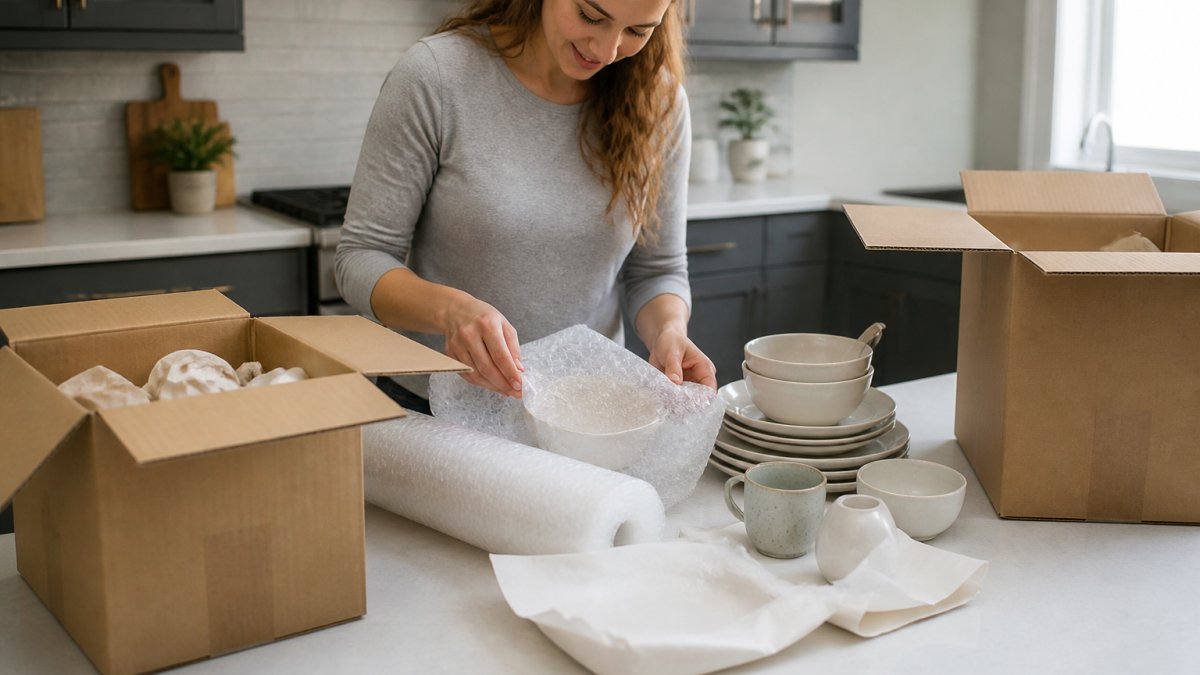
Packing dishes without breakage comes down to one rule: no plate touches another plate, and no stack sits directly on the box bottom. Every plate gets its own paper wrap, and the box gets a cushioning base before the first dish goes in.
Getting It Done - Budget Home Repairs
Follow these steps:
Bowls stack rim-down with paper between each one. Mugs go handle-up, wrapped separately, with paper stuffed inside the cup. A common mistake is packing dishes flat and stacking them; that puts the full weight of the box on the center of the bottom plate.
Glassware needs individual wrapping plus a divided box, because glass breaks from contact with other glass more often than from impact with the box itself.
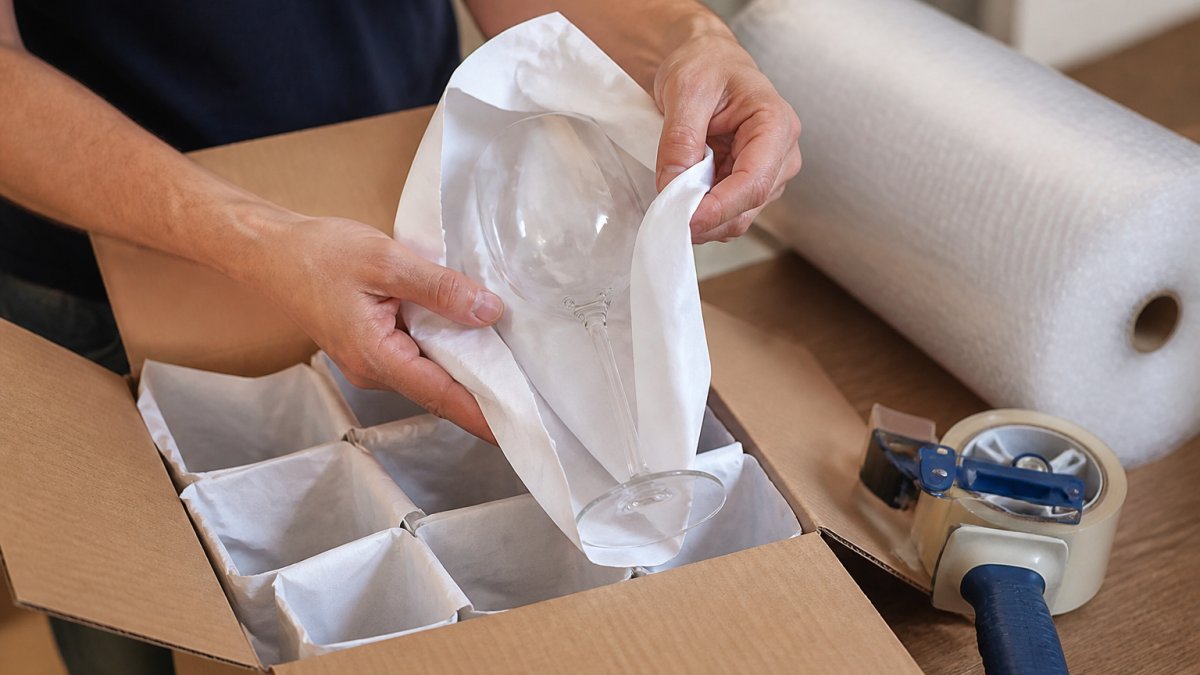
For wine glasses, wrap the bowl first, then wrap the stem separately so the paper supports it from below. Place each glass upright in a divided cell, never on its side.
Artwork, mirrors, and framed prints need a different approach: flat, rigid protection rather than cushioning alone. Tape an X of painter's tape across the glass face so that if it cracks, the pieces stay contained.
For canvas prints without glass, skip the tape and use a layer of packing paper followed by cardboard across the face. Mirrors follow the same method as framed art. Label each piece "fragile" and "this side up" on the outside of the cardboard.
Professional movers generally will not pack certain items, and this is standard practice across the industry rather than a limitation of one company. Common exclusions include hazardous materials such as propane tanks, paint, aerosols, and cleaning chemicals; perishable food; live plants; and items of extraordinary value such as jewelry, cash, and important documents.
Handle these yourself:
Ask your mover for a written list of excluded items before packing day. Knowing the list early prevents a last-minute scramble and avoids surprise charges for items the crew cannot legally load.
A reinforced box bottom carries the weight of everything above it, so it deserves more than one strip of tape.
Filling empty spaces is the step most households rush. Shake each closed box gently before sealing it; if anything moves, open it and add more crumpled paper or foam. Small boxes should have no more than an inch of give in any direction.
Label every box on the top and two sides with the destination room, a short contents list, and a "fragile" or "this side up" marking where relevant.
Run this check before sealing any fragile box:
Watch Out
Skipping the shake test is the most common cause of in-transit breakage. A box that shifts even slightly when tilted will let contents collide over every bump in the road, and the damage usually shows up on the items packed deepest.
Storage and long-distance moves add two risks that a short local move does not: sustained stacking pressure and temperature swings. Boxes in storage sit under weight for weeks or months, so cushioning compresses and contents settle.
For storage and long hauls:
For long-distance moves, when moving fragile items, pack them last so they load first and sit at the top of the stack, away from heavy furniture. If you are moving in summer heat, keep packed boxes out of a hot garage before loading day.
Standard moving coverage is not the same as insurance, and understanding the difference protects you before anything breaks. Most movers provide basic released-value coverage at no extra cost, which pays a set amount per pound per item rather than the item's actual value. Full-value protection costs more and covers repair or replacement up to a declared value.
Document high-value items before packing day:
Key Takeaway
The time to document a fragile item's condition and value is before it goes in a box. Photos and receipts taken on packing day are what make a claim straightforward instead of a dispute.
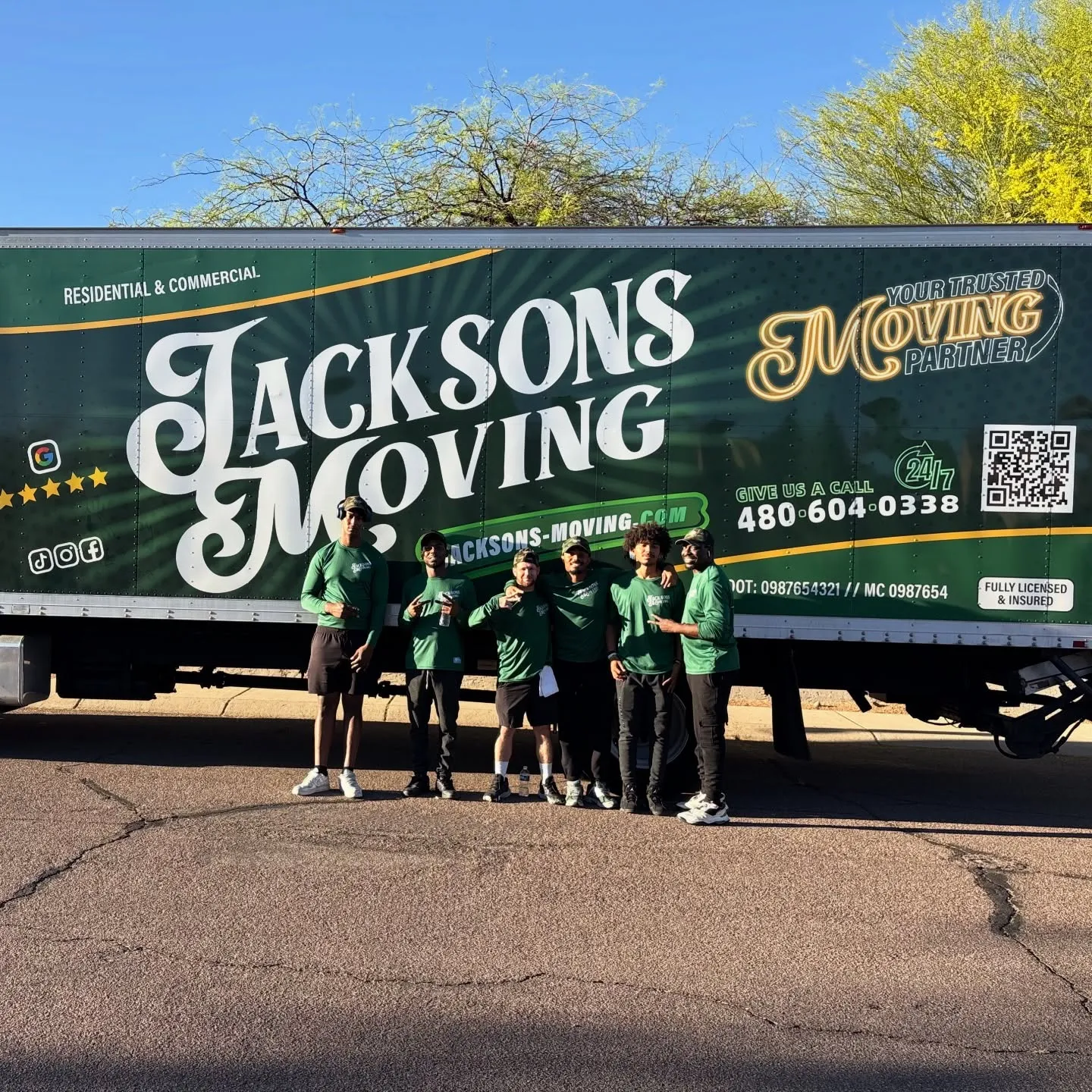
Fragile items break for predictable reasons: wrong box size, missing cushioning, items touching each other, and boxes that shift in transit. If you would rather hand the whole job to a crew that packs fragile items every day, Jackson's Moving offers professional packing alongside local and long-distance moving and junk removal, with transparent pricing and no hidden charges.
Transport fragile items in small, sturdy boxes with a cushioning base. Wrap each piece individually with packing paper or bubble wrap, then fill all empty spaces so nothing shifts. Place heavier items at the bottom of the box and lighter ones on top, and load boxes so they cannot slide during the drive. Label every box "Fragile" and keep it upright. For high-value pieces, move them yourself in your own vehicle rather than on the truck.
Small boxes work best for fragile items. A small box limits how much weight stacks on the bottom layer, which reduces crushing and breakage. Large boxes encourage overloading, and the extra interior space means more movement when the box is handled. Use small or medium boxes for dishes, glassware, and knickknacks, and reserve large boxes for lightweight, non-fragile items like bedding or pillows.
Write "Fragile" and "Handle with Care" in large letters on at least two sides of the box, plus an arrow showing which side goes up. Note the room the box belongs in and a short contents list so you can find items at the destination. Mark heavy boxes separately so movers lift them correctly. Clear labeling helps the crew stack and load your boxes with the right care and speeds up unpacking.
Wrap each glass individually in packing paper, then add a layer of bubble wrap for stemware. Stand glasses upright rather than stacking them, and use cell dividers or cardboard inserts to keep pieces apart. Line the box with a cushioning base, fill gaps with crumpled paper, and seal the top with tape. Keep glassware boxes small so weight stays manageable, and never let glass touch glass without padding between them.
For irreplaceable or high-value pieces, moving them yourself is often safer. Jewelry, important documents, antiques, and family heirlooms are better kept with you than loaded on a truck where multiple boxes are handled by several people. If you do let movers transport them, document each item with photos and confirm your valuation coverage beforehand. Ask about what movers will not pack, since some items are excluded from transport by policy.
Read genuine feedback from our satisfied customers to understand why we are the trusted choice for moving services.
From Phoenix to communities across the Valley, Jackson's Moving is here when you need residential, commercial, or long-distance moving services. Request your free quote today.