
Written by:
Editorial Team
Published:
October 26, 2026
Last Updated: October 26, 2026
Quick Summary
Ask movers how many crew members they will send for a tight stairwell, whether they will walk the route before quoting, and what their plan is if a piece won't clear a turn. For narrow staircases, also confirm what triggers stair fees, whether the estimate is binding, and who handles disassembly and reassembly. Get every answer in the written estimate.
A narrow staircase is the single biggest wildcard in a residential move, turning a simple carry into a puzzle of angles, clearance, and crew size.
Most moving quotes assume a standard path: door to truck, no surprises. Narrow staircases break that assumption, adding time, labor, equipment, and cost.
The real work starts before anyone lifts a box: know what to ask movers about narrow staircases and get straight answers in writing.
A good mover welcomes detailed questions; a weak one dodges them. Use this checklist as your script and record each answer to compare providers.
Start with the physical reality of your stairwell. These questions reveal whether the company has thought about your space.
A crew of two may handle a simple flight; a narrow staircase with tight turns often needs three or four. Ask directly, and listen for a specific number.
This is where surprise fees hide. Pin down the money before you sign.
Get every answer in the written estimate. A verbal "we'll figure it out" is not a number.
Ask who pays if a railing gets scuffed or a table leg cracks.
For a deeper look at spotting hidden costs before you sign, see our guide on how to avoid surprise moving fees.
Once you know what to ask, request numbers from a mover who handles tight spaces. You can book your move today. You can GET A QUOTE.
A strong answer to "how will you get this down the stairs?" is specific. A weak one is vague.
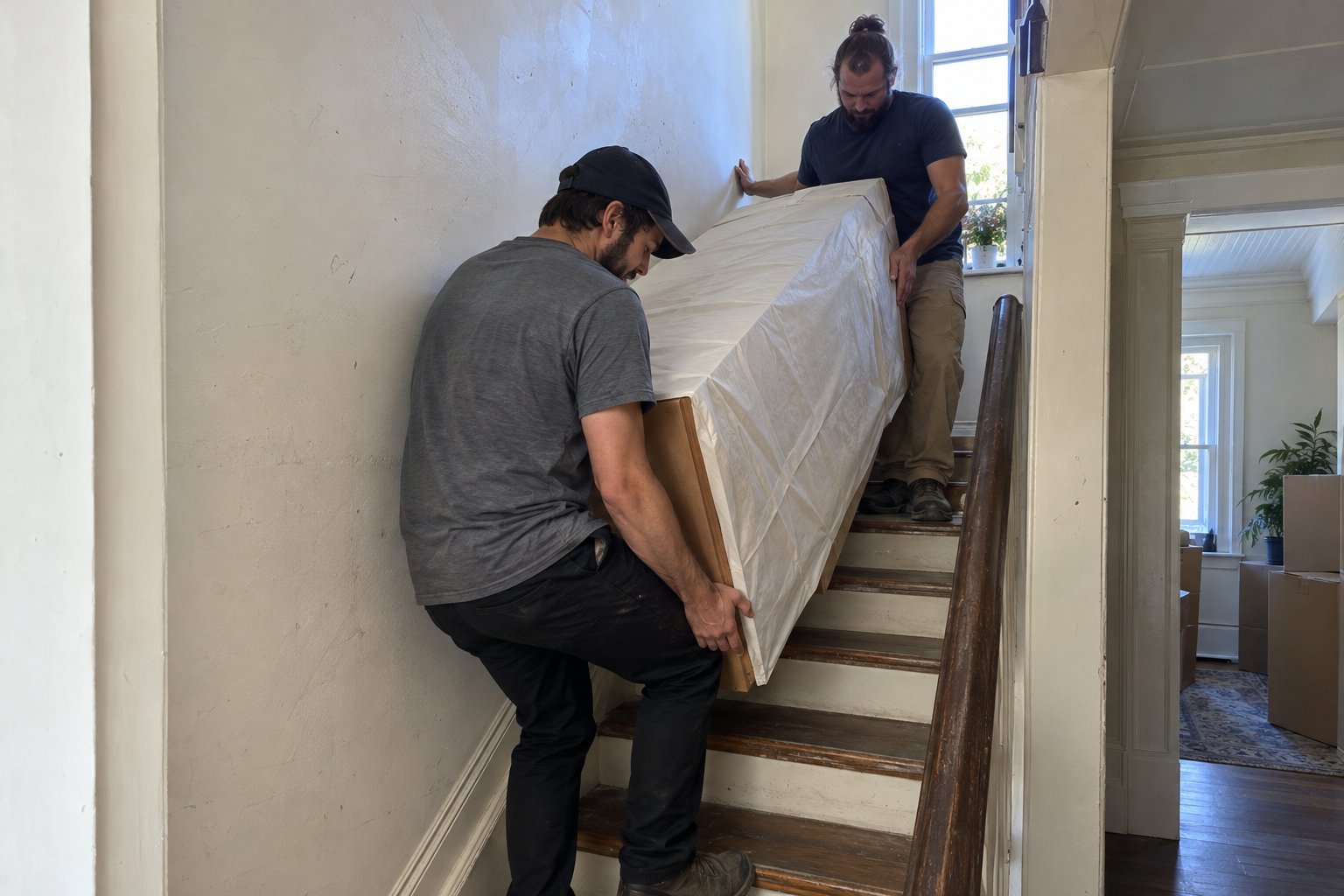
A good mover describes a route assessment: they walk the path, check staircase width and stairwell clearance, and identify the tight turn or switchback landing before the truck arrives.
A weak mover says "we do this all the time." That tells you nothing.
Signals of a real plan:
If a mover can't describe the maneuver, they haven't planned it. Keep asking.
Accurate measurements turn guesswork into a plan. Grab a tape measure, a notepad, and your phone's camera, and record the numbers below, the goal is a package detailed enough for a mover to quote accurately without a second visit.

Measure and record these points:
Then measure the furniture: its longest side, shortest side, and diagonal. The diagonal is the number most people forget, and it often decides whether a piece clears a turn. For a sofa, also note back height and arm depth, which determine whether it can be tipped on end.
Numbers alone don't tell a mover where the problem is. Pair each measurement with a photo taken from a consistent spot.
Customers often send a single wide shot that makes the staircase look roomier than it is. Movers who quote from it underprice the job, then adjust on move day, exactly the surprise you're trying to avoid.
Package the information so a mover can read it in under two minutes:
Send the package by email or through the mover's quote form so there's a written record, and ask the mover to confirm receipt and reference the measurements in the estimate. If a company quotes without acknowledging your numbers, the estimate is a guess.
Pro Tip
Keep a copy of the measurement package. If the crew arrives and claims the stairs are tighter than described, your dated photos and numbers are the record that settles the conversation.
Share the numbers as a simple list with photos of each tight spot. A mover with real measurements can give a real estimate, and you'll have documentation if the final bill drifts.
Record these measurements and pair each with a photo so a mover can quote accurately without a second visit.
Stair fees are real and usually tied to access constraints. The question is what triggers them, how they interact with your estimate type, and whether the terms are on paper before the truck arrives.
Common triggers for an additional flight charge include:
Ask how the fee is calculated: per flight, per hour, or by difficulty. Then confirm it appears in the written estimate with the exact conditions spelled out, the number of flights covered, the carry distance included, and what counts as an extra.
A binding estimate locks the price for the services listed, so a stair fee not in the document generally can't be added later for the same scope.
If your stairs are the hard part of the move, ask for a binding or binding-not-to-exceed estimate. Expect the mover to want the measurement package described above before committing to a number, that's a good sign, not a delay.
Beyond stair fees, scan the written estimate for these common sources of bill drift:
Each should have a rate or formula attached. A line that says "additional fees may apply" without a number is not a term you can plan around.
Watch Out
A verbal promise that "we won't charge for the stairs" is not a term. If it isn't in the written estimate, assume it can appear on the invoice.
For the full breakdown of how stair surcharges are calculated before you negotiate, read do movers charge extra for stairs.
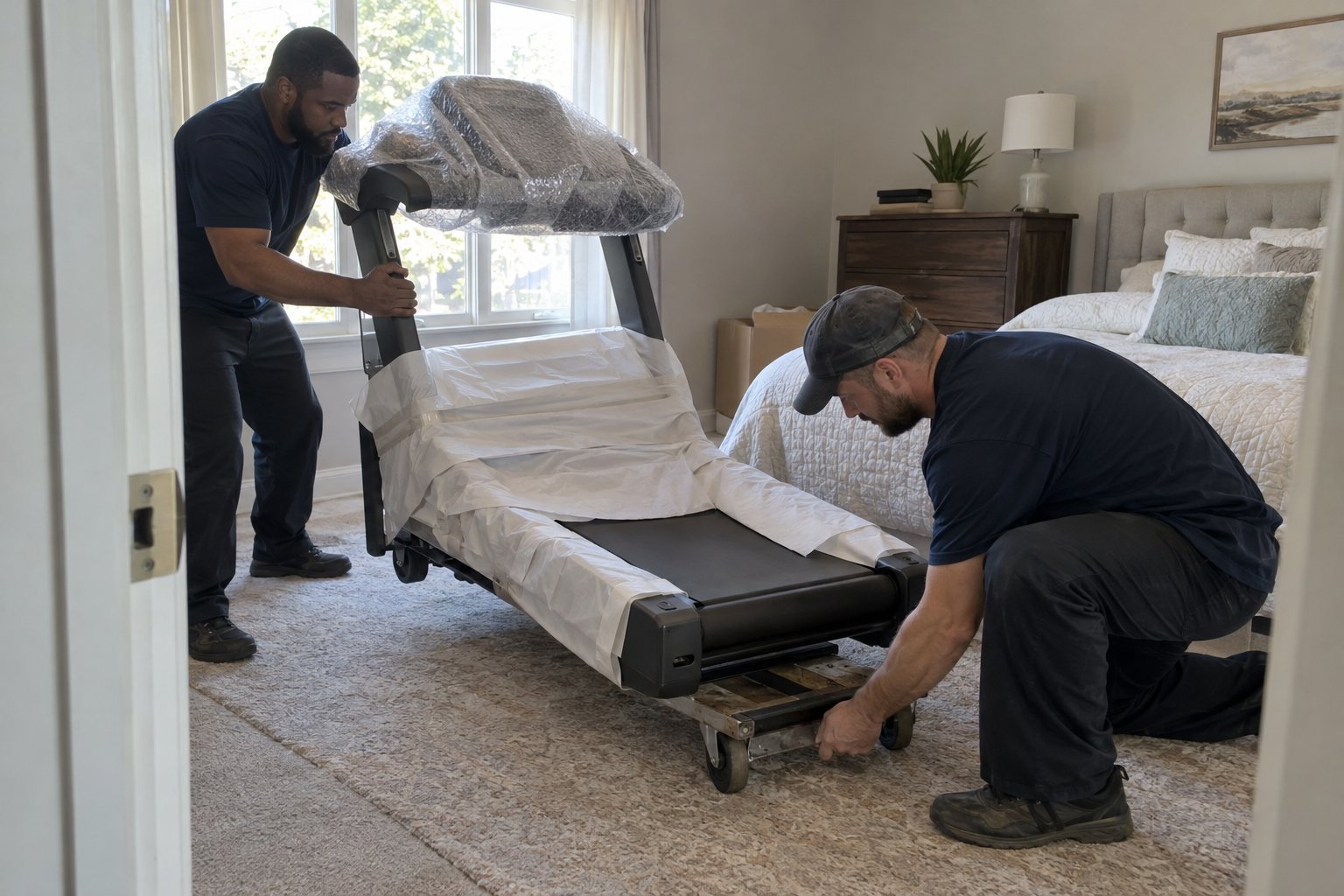
Some furniture won't clear a tight stairwell assembled, a bed frame, wardrobe, or large table may need to come apart. Ask early whether disassembly and reassembly are included or billed separately.
Questions to ask:
Get the answer in writing. A crew that disassembles but doesn't reassemble leaves you with a pile of parts and a tight deadline. Our moving services can include disassembly, wrapping, and placement, which matters when the stairwell is the hard part.
Damage on a narrow staircase usually happens at the corners. A railing catches a box. A wall corner scrapes a dresser. The fix is preparation, not luck.
Ask your mover what protection they use:
Then walk the route together and mark the tight spots. A good crew pads the hazards before the first item moves. If you want to protect the space yourself, our guide on moving furniture without damaging floors or walls covers the techniques.
Sometimes the numbers don't work. The sofa is too wide, the turn is too tight, and no amount of tilting solves it. Decide before move day, not during it.
Work through these options in order:
Ask your mover which option they recommend and what each costs. A crew that plans for the "won't fit" case saves you a stressful move-day scramble.
Many do. Stair carries take longer and burn more crew energy, so companies often add an extra flight charge or build stair access into the hourly labor estimate. The exact structure varies: some quote a flat per-flight fee, others bill the additional time. Ask for the stair charge in writing before you book, including how many flights are covered and what counts as a flight. That single question prevents the surprise line item people complain about most on moving day.
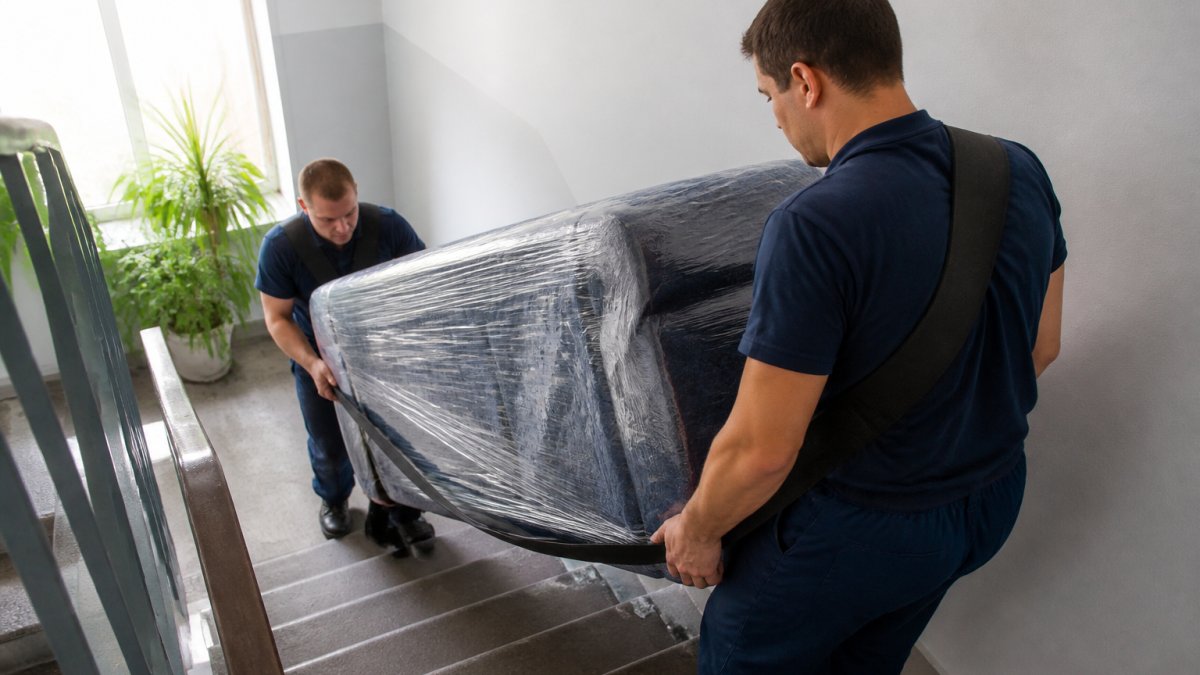
Often yes, but it depends on the piece and the stairwell. A crew can tilt, rotate, and pivot a sofa or dresser through a tight turn when the stairwell clearance allows it, sometimes using carrying straps to keep hands free. The limiting factors are staircase width, ceiling height at the turn, and whether the item can be angled at all. Send measurements and photos ahead of time so the crew arrives with the right equipment and enough people.
Give them the narrowest staircase width, the height and depth of any switchback landing, the number of flights and turns, and the dimensions of your bulkiest items. Add door widths at both ends of the route and note any low ceiling or railing that narrows the path. Photos taken from the bottom and top of the stairs help more than numbers alone. Accurate measurements let the company size the crew and flag access constraints before the truck is loaded.
Ask this before booking, because the answer reveals how the company handles contingencies. Good movers discuss options during the site evaluation: disassembly, hoisting through a window or balcony, using an alternate route such as a side door, or leaving the item behind. Get the fallback plan and any related fees in the written estimate. If an item truly cannot be moved, you want to know who decides, what it costs, and whether storage or disposal is available.
Narrow staircases reward preparation. The right questions, real measurements, and written answers turn a risky move into a smooth one. Jackson's Moving is a family-owned company with transparent, straightforward pricing and no hidden charges, and our trained crew handles tight stairwells with care. We're available 24/7 and back every move with efficient, on-time service. Get started with Jackson's Moving and get a clear quote before move day.
GET A QUOTE
 Add jacksons-moving.com as a preferred source on Google →
Read genuine feedback from our satisfied customers to understand why we are the trusted choice for moving services.
From Phoenix to communities across the Valley, Jackson's Moving is here when you need residential, commercial, or long-distance moving services. Request your free quote today.