
Written by:
Editorial Team
Published:
October 24, 2026
Last Updated: October 23, 2026
Quick Summary
Yes, movers often charge extra for stairs, but not always. Whether movers charge extra depends on how the job is priced, how many flights are involved, and how the company builds its estimate. At Jackson's Moving, we build stair and access details into the quote up front so nothing appears on moving day as a surprise.
Yes, movers often charge extra for stairs, but not always. Whether movers charge extra depends on how the job is priced, how many flights are involved, and how the company builds its estimate.
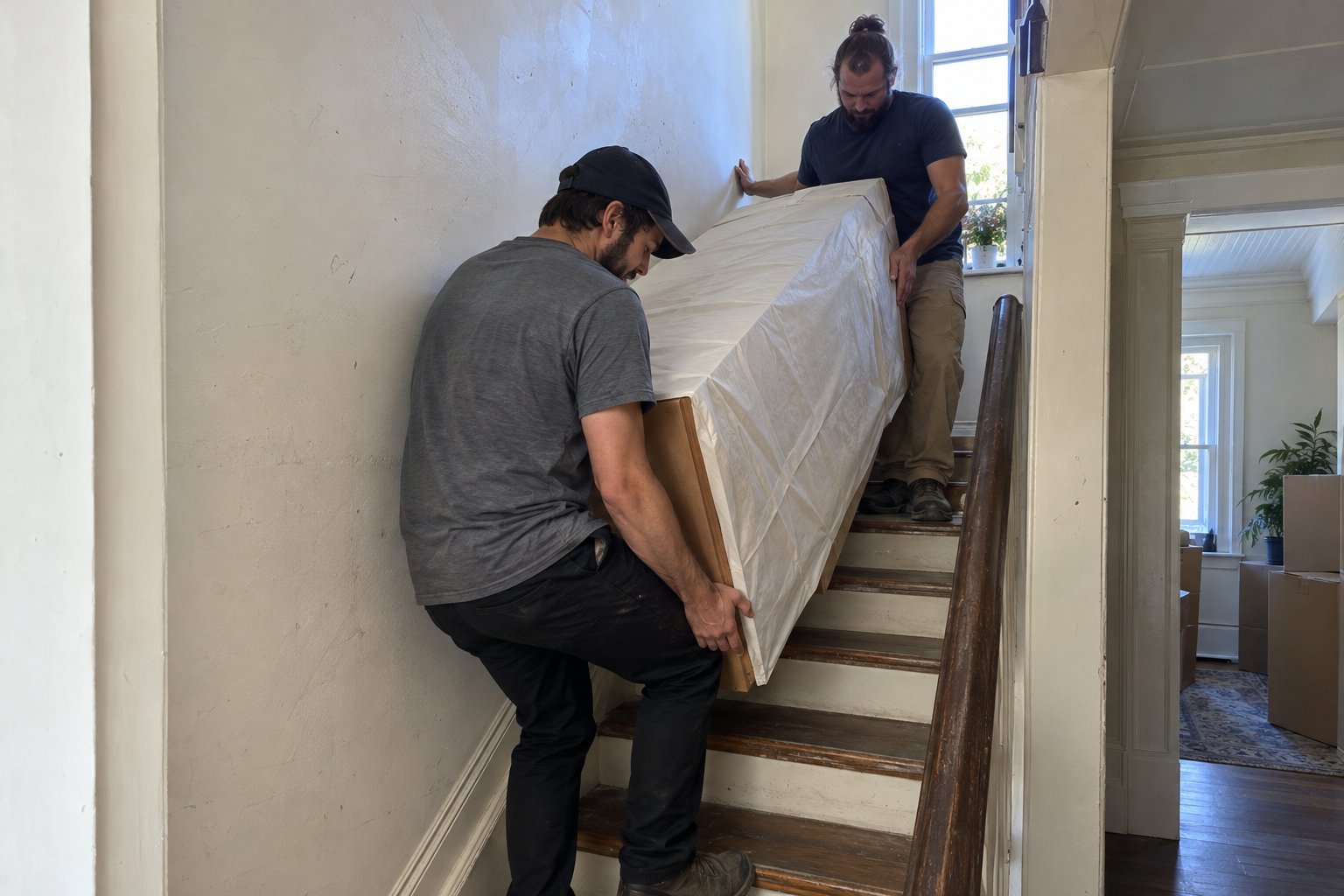
The plain truth: stairs add labor time. More time means more cost in most pricing models.
Here's what most guides get wrong. They treat stair charges as a fixed rule. In practice, it's a pricing policy question, and policies differ from one moving company to the next.
Stair fees get calculated in one of three ways: a flat per-flight charge, an hourly add-on, or nothing at all beyond the labor time already billed. The method the company uses matters more than the number itself.
According to HireAHelper's guide to stair fees for movers, movers commonly charge either a flat fee or an hourly add-on for stairs. That matches what we see across the industry: there is no single standard.
Hourly moves usually skip the separate stair fee. The extra time it takes to haul boxes down two flights shows up in the hours billed, so a second charge would double-count the work.
Flat-rate and binding estimates work differently. The price is locked before the job starts, so the company has to account for stairs somewhere. That's where per-flight charges and access surcharges appear.
Pro Tip
Ask which pricing model the quote uses before you discuss stairs. On an hourly move, a "stair fee" on top of labor time is worth questioning. On a flat-rate move, the charge is normal and should already be itemized.
Movers use one of these methods to account for stairs in a quote.
Stair fees vary widely by company and region, and no single national rate exists. What drives the price is the number of flights, the weight and bulk of the items, and how far the crew has to carry everything.
The biggest cost factors:
A single flight of stairs in a house is often treated as standard. Anecdotal reports from movers and customers suggest many companies don't charge for the first flight at all, especially on single-family homes.
A flight of stairs is one level, usually 12 to 16 steps. Most policies count flights from the ground floor up, and the first flight is frequently included.
Elevators change the math. A building with a working elevator and a short hall usually costs less than a walk-up, even on an upper floor.
For a closer look at how these charges stack up against the full cost of a move, see our full pricing breakdown.
The best defense against surprise stair charges is a written, itemized estimate you can read line by line. Most competitors stop at "ask for an itemized quote." The useful part is knowing which line items to check and what to do when the invoice doesn't match.
Before you sign, confirm the estimate spells out each of these separately:
A legitimate estimate lists these as separate line items with a defined rate or a stated "included." If a company quotes one lump sum with no breakdown, ask what's included and what isn't, and get the answer in writing.
A well-written stair charge answers three questions in the document itself: how a flight is counted, where counting starts, and what triggers an access surcharge. Look for language like "first flight included, $X per additional flight" or "stair fee applies to walk-ups above the second floor." Vague wording such as "stairs may incur additional charges" gives the mover room to apply the fee at their discretion on moving day.
Discrepancies usually come from one of three sources: the on-site inventory differed from what you reported, access conditions changed (a reserved elevator wasn't available, parking was farther than described), or the quote was non-binding. For moves, federal rules require movers to give you a written estimate and to base charges on the binding or non-binding terms you agreed to; a binding estimate limits what you can be charged for the services listed. For local moves, terms are set by state regulators and company policy, so read the contract's dispute and reweigh provisions.
If the invoice is higher than expected:
Watch Out
Verbal promises about fees don't hold up. If a phone rep says "stairs are free," get it written into the estimate or contract. Otherwise it's unenforceable when the invoice arrives.
Our guide on how to avoid surprise moving fees walks through a seven-step process for catching these charges before they land on your final bill.
Before you book, ask direct questions and write down the answers. A transparent moving company will answer all of them without hesitation.
At Jackson's Moving, we answer these before the job is booked, not after. Our pricing is straightforward, and we put the details in writing so there are no hidden charges later.
When you're ready to move forward, you can request a free moving quote or book your move today with transparent pricing from the start.
A walk-up move goes faster and costs less when you prepare the path first, but the bigger win is giving the mover an accurate access inventory before the quote, so stair charges are based on reality instead of a guess.
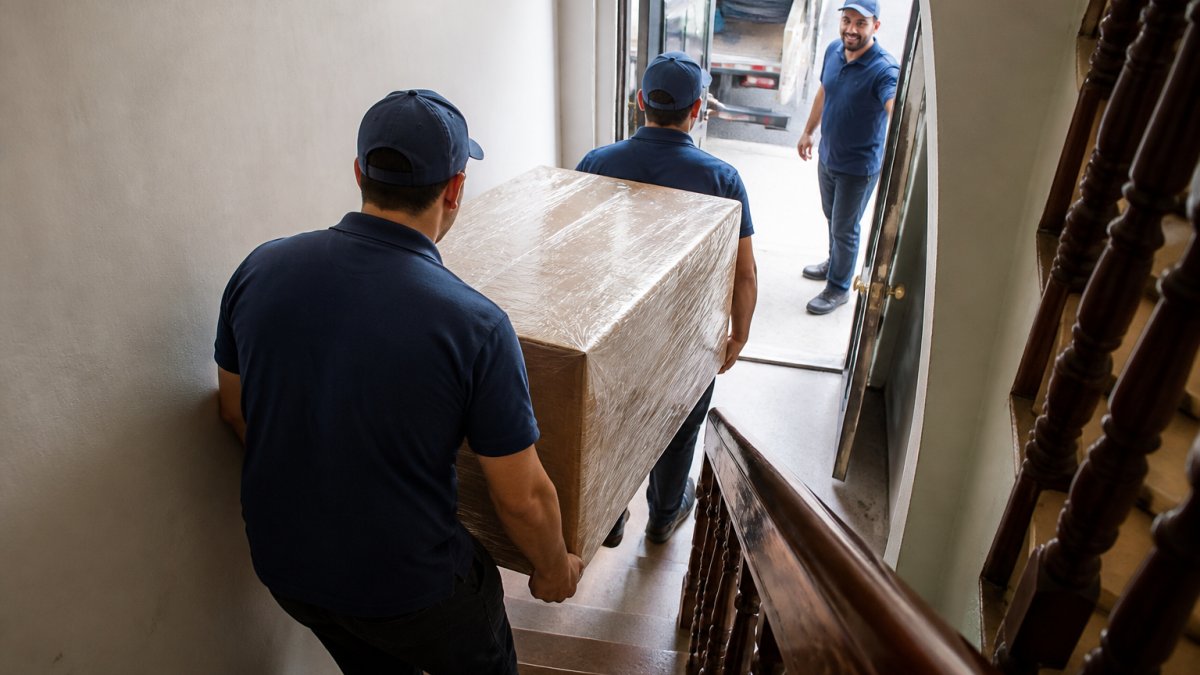
Walk your building and record each of these. Give the numbers to every mover you contact so quotes are comparable:
Steep, narrow, damaged, or unsafe stairs can change the plan. Tell the mover in advance if any of these apply:
Flagging these early lets the mover price the job accurately and bring the right crew size. Discovering them on moving day is how a quote turns into a revised bill.
If you're moving out of an apartment, our apartment moving service covers packing, hauling, and logistics from start to finish.
You can lower stair costs by reducing the work itself. Fewer trips, lighter loads, and a clear path all cut labor time, which is the real driver of cost.
Key Takeaway
The single biggest lever on stair costs is labor time. Anything that shortens the carry, from decluttering to closer parking, directly reduces what you pay.
Stair charges are real, but they're not universal, and they're never a mystery you have to accept blindly. Ask how the quote is built, get every fee in writing, and prepare your walk-up before the crew arrives.
Jackson's Moving is a family-owned company built on transparent, straightforward pricing, careful handling of your belongings, and on-time service. We quote the stairs up front so there are no hidden charges on moving day.
It depends on how the move is priced. On hourly local moves, many companies do not add a separate stair fee because the extra time and labor show up in the billable hours. On flat-rate or long-distance moves, movers often quote a per-flight charge or an access surcharge. Policies vary widely by company. Ask directly whether stairs are built into your quote and get the answer in writing before booking.
Most companies count the number of flights at both pickup and delivery, then apply a per-flight charge or add labor time. A flight usually means a full run of stairs between floors. Some quotes include the first flight at no charge and bill only additional flights. Elevator access, long carries from the truck, and difficult parking can also factor into the calculation. Because methods differ, ask your mover to explain exactly how they count flights and what triggers an extra charge.
A reputable company should not add charges that were not disclosed in your written estimate. If the crew arrives and your actual access differs from what you described, such as a broken elevator or a longer carry than stated, a legitimate adjustment may apply. To protect yourself, walk the stairs and access route with the estimator, confirm the flight count in writing, and ask what conditions would change the price. Get any moving estimate additional fees itemized before you sign.
Be upfront about stairs, elevators, parking distance, and heavy items when you request your quote. Measure the walk from the truck to your door and count flights accurately. Ask the questions to ask movers about fees list: what is included, what triggers surcharges, and how flights are counted. Reserve elevators and parking spots ahead of time, and declutter before moving day to cut labor time. A transparent mover will put all of this in the estimate, so nothing surprises you on arrival.
GET A QUOTE
 Add jacksons-moving.com as a preferred source on Google →
Read genuine feedback from our satisfied customers to understand why we are the trusted choice for moving services.
From Phoenix to communities across the Valley, Jackson's Moving is here when you need residential, commercial, or long-distance moving services. Request your free quote today.