

Written by:
Editorial Team
Published:
November 10, 2026
Last Updated: November 8, 2026
Quick Summary
To learn how to verify a moving company's insurance coverage, look up the carrier's USDOT number in the FMCSA Licensing and Insurance database, then request a certificate of insurance and read it line by line. Finally, call the insurer's agent using the number on the certificate to confirm the policy is active on your move date.
Not sure your mover is really insured?Jackson's Moving shares coverage details up front so you can verify before you book.Get a Free Quote
A moving truck pulls up, your boxes are loaded, and somewhere between two states a box of dishes ends up crushed. That is when insurance coverage stops being paperwork and becomes the difference between a claim paid and a loss you eat. Knowing how to verify a moving company's insurance coverage before you sign is the single most protective step in hiring a mover.
Here is what most guides skip: a mover can show an official-looking certificate of insurance and still leave you uncovered. The document must match your job, your dates, and the carrier's legal name.
This guide covers the federal databases, the certificate itself, and the phone call that confirms the policy is real.
Every legitimate interstate mover must hold a USDOT number and active operating authority from the Federal Motor Carrier Safety Administration. That registration is your first filter.
Start with the FMCSA's registered mover search tool. Type in the company's legal name or its USDOT number.
Look for three things:
For the full step-by-step walkthrough of checking a carrier record, see our guide on how to verify a moving company license.
The FMCSA's Licensing and Insurance database is where insurance filings are recorded.
Open the carrier's record and scroll to the insurance section. You should see filings for auto liability and cargo insurance, each with an effective date.
Watch out: some records show a filing but list the insurer as "pending" or show a cancellation date. That means the policy lapsed or was cancelled.
A certificate of insurance, or COI, is a one-page summary from the mover's insurer showing active policies and their limits. Ask for it in writing before you sign the estimate. Any carrier that hesitates is telling you something.

Now read it slowly. Most people glance at the logo and stop. Here is what each line means:
This is where rogue operators get caught. A mover may operate under a catchy trade name while the policy sits under a different legal entity.
Ask the mover to explain the relationship in writing. If the COI lists one legal name and your contract says another, get the connection documented.
Then check the limits against your move. A cargo policy with a low limit will not cover a household of furniture.
A COI is a summary, not the policy itself. It proves coverage existed on the date it was issued, but the actual policy, including exclusions, deductibles, and conditions, controls.
Verify each line:
Watch out: a COI with no policy number, no NAIC number, or an insurer you cannot look up is not proof of anything. Ask for a corrected certificate before you sign.
The COI rarely lists exclusions, but the policies behind it do. Ask for the declarations page and read the exclusions for the cargo and auto policies. Common exclusions include:
If the COI shows a cargo limit that is low relative to the replacement value of your household, the gap is not covered by the policy, it is covered, if at all, by the valuation option you select with the mover.
Before you sign, confirm each of the following in writing:
If any line is blank, illegible, or inconsistent with the FMCSA record, request a corrected certificate. A legitimate mover should provide one readily.
Call the phone number on the certificate, not one the mover gives you. Ask the insurer one question: is this policy active on my move date for this carrier?
The agent should confirm four things: the policy is in force, the named insured matches the mover, the limits match the certificate, and the policy covers household goods moves, not just general freight.
Get the name of the person you spoke with and the date. If the insurer says the policy does not exist, stop. Do not sign, do not pay a deposit.
Most people freeze on the phone. Use this sequence and write down the answers:
A written confirmation, even a short email from the agent, is far more useful than a verbal assurance if a dispute arises. Ask for it before you book.
Before you call, confirm the insurer is real and licensed. Use the NAIC number on the certificate to look up the company through your state insurance department's website. If the insurer does not appear, or the NAIC number does not match the company name, treat the certificate as suspect.
A state insurance department lookup can show which lines an insurer is licensed to write in your state.
Sometimes the call does not go cleanly. The agent may be unavailable, the policy may be under a different entity, or the certificate may be out of date. Here is a practical escalation path:
Confirm coverage twice: once when you receive the estimate and again within a few days of your move date. Policies can lapse or be canceled between booking and moving day, and a second call closes that gap.
If your move involves storage, subcontractors, or a broker, ask the insurer whether the policy covers those arrangements. A carrier's policy may cover its own trucks and crews but not a subcontractor's, and a broker's certificate may not cover the carrier actually performing the move.
These two terms get used interchangeably, and that confusion costs people money. They are not the same thing.
Valuation coverage is a liability program the mover offers, not a separate insurance policy. It sets how much the mover pays if your goods are lost or damaged. The two standard levels are:
Insurance coverage is a separate policy, often from a third party, that protects against loss during the move. Some movers offer it; some do not.
The key difference: valuation is tied to the mover's liability, while insurance is a policy you or the mover hold. For a deeper comparison, see our guide on choosing moving insurance coverage.
The two terms are not interchangeable, and the difference decides who pays when something breaks.
A mover with no FMCSA record, a COI that won't confirm, or a legal name that doesn't line up is a rogue mover until proven otherwise. The warning signs are consistent:
When records don't match, ask for written clarification. If the mover dodges, that is your answer. If you suspect a bad actor, our 7-step reliability check helps you confirm your instincts before you sign anything.
Coverage is not a blanket. Even a solid policy has gaps, and knowing them changes how you pack and what you ask for.
Typically covered:
Often not covered:
For fragile or high-value belongings, ask about added protection before the truck arrives. Our guide on insuring fragile belongings for a move covers how to handle those items specifically.
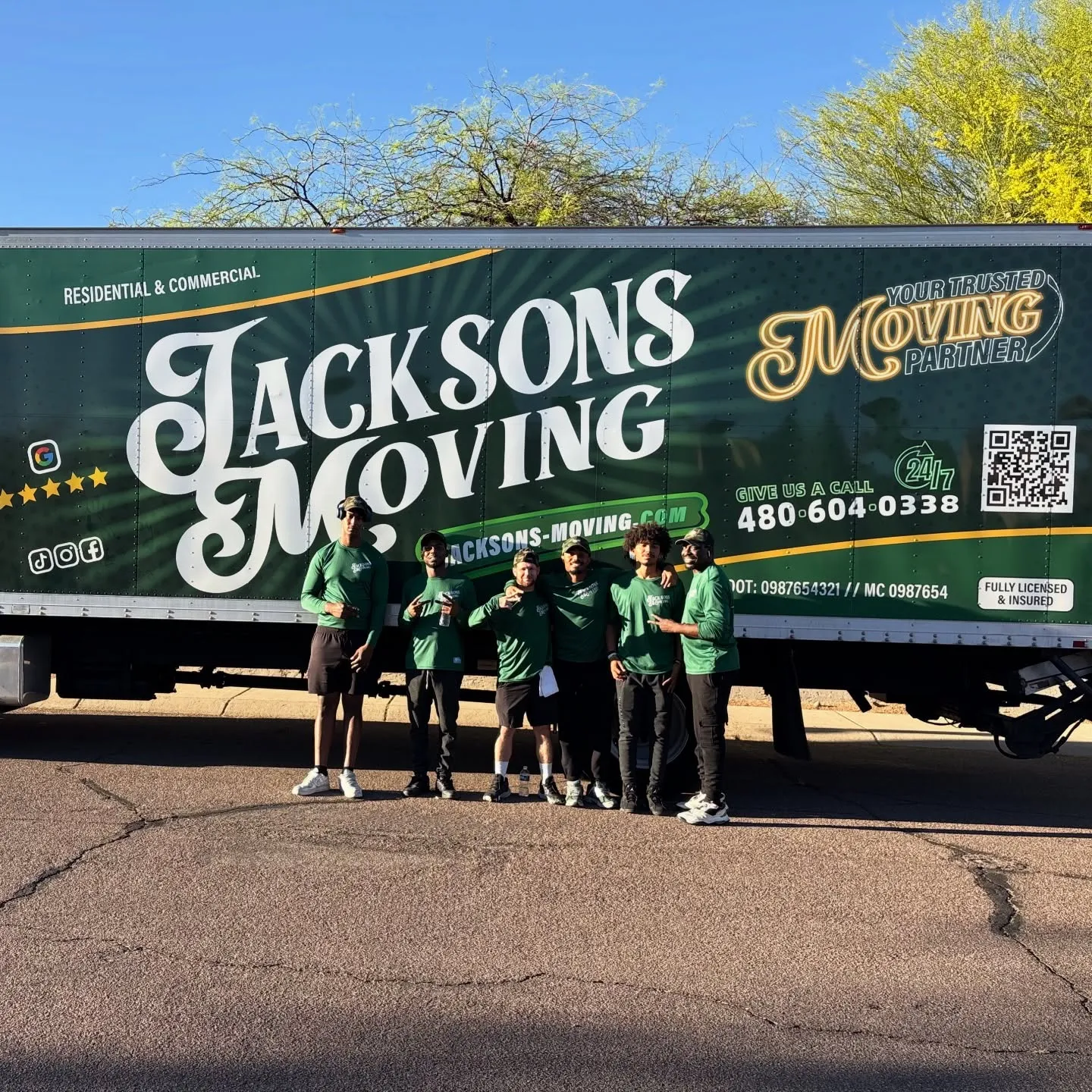
The simplest way to avoid the insurance runaround is to hire a mover that hands you the details without being asked. That is how we operate at Jackson's Moving.
As a family-owned company, we focus on transparent, straightforward pricing with no hidden charges.
Before you book, ask any mover for the COI, the FMCSA record, and the insurer's phone number. A legitimate company will hand them over without blinking. Request a free moving quote and we will walk you through the coverage details up front.
The real test of a mover is not the sales pitch, it is whether the paperwork holds up when you check it.
Start with the FMCSA's Search for a Registered Mover tool or the SAFER system using the company's USDOT number. Confirm the legal business name matches your quote, then request a certificate of insurance naming the policy number, coverage limits, and effective dates. Call the insurer or agent listed on the COI to confirm the policy is active for your move date. A legitimate mover will provide this without hesitation.
Moving company insurance and valuation coverage are not the same thing. Liability coverage such as cargo insurance protects the carrier against claims, while valuation coverage sets what the mover pays you if items are lost or damaged. Released-value protection is typically calculated by weight, while full-value protection costs more and repairs or replaces items. Ask which valuation option is included in your quote before signing.
Look up the USDOT number in the FMCSA's Licensing and Insurance database or SAFER system. The record should show an active operating authority, a current insurance filing, and the same legal business name and address printed on your estimate. If the record shows an inactive status, a different company name, or no insurance filing, treat that as a red flag and do not pay a deposit until it is resolved.
Rogue movers typically demand a large cash deposit upfront, quote unusually low prices, show no USDOT or MC number, refuse to provide a written estimate, and cannot produce a certificate of insurance. They may also answer the phone with a generic name rather than the company's legal name. Cross-check the phone number, address, and business name in the FMCSA database and your state's licensing records before booking.
Read genuine feedback from our satisfied customers to understand why we are the trusted choice for moving services.
From Phoenix to communities across the Valley, Jackson's Moving is here when you need residential, commercial, or long-distance moving services. Request your free quote today.
 Add jacksons-moving.com as a preferred source on Google →