
Written by:
Editorial Team
Published:
October 31, 2026
Last Updated: October 31, 2026
Quick Summary
Moving insurance is the protection that reimburses you when movers lose or damage your household goods in transit, and it usually comes from the moving company itself, not a separate insurer. The coverage quoted in an estimate is typically a valuation option attached to the bill of lading, offered as free Released Value Protection or extra-cost Full Value Protection. Review the fine print before signing, because exclusions and declared value decide what you actually recover.
Moving insurance is the protection that reimburses you when movers lose or damage your household goods in transit. That protection usually comes from the moving company itself, not from a separate insurer.
Here's the part most guides get wrong: the coverage quoted in a moving estimate is rarely an insurance policy.
Below, we break down each coverage type, the exclusions that catch people off guard, and how a claim actually works when something breaks.
The two valuation options quoted in a Phoenix moving estimate differ sharply in cost and payout.
Released Value Protection is the basic liability coverage included at no charge with most moves. Reimbursement under this option is tied to weight rather than replacement cost.
A 10-pound lamp that cost you $150 would reimburse roughly $6 if destroyed. That math explains why the FMCSA guidance on mover liability options treats this as minimal protection rather than real insurance. It exists to satisfy the legal minimum, not to make you whole.
That said, released value protection has one clear use: low-value, heavy items. Bookshelves, tool chests, and boxed kitchenware travel cheaply under this option. Lightweight valuables do not.
Full Value Protection covers repair, replacement, or a cash settlement for lost or damaged items, typically up to a declared value you set. Full value protection is available on many moves, and you should ask each mover what it offers.
Cost depends on the declared value you choose, your deductible, and the distance of the move. We can't quote a number here because pricing varies by shipment, so ask for the written rate sheet when you request your estimate.
Three things decide your premium:
Full value protection is generally a better fit when your belongings are worth more than the released-value option would pay.
Moving insurance exclusions are the clauses that void a claim, and they matter more than the coverage headline. Standard valuation terms typically exclude:
That last one deserves attention. If you own art, antiques, or high-end electronics, declare them before loading day and ask for a written high-value inventory. Undeclared items often fall outside the settlement terms entirely.
Watch out: packing your own boxes to save money can quietly strip coverage from everything inside them. If careful handling matters, let the crew pack.
Many valuation terms cap recovery for certain categories unless you declare them and arrange additional protection, so check the limits for jewelry, silverware, and collectibles in your own paperwork. Cash and negotiable documents are almost universally excluded outright, so plan to carry those yourself.
For items above the standard limit, ask the mover for a high-value inventory form and list each item with a description, estimated value, and photo.
Plants deserve a special note. Live plants are often excluded from valuation, so ask about plants before booking. If your plants matter, plan to move them yourself or rehome them.
Local conditions create claim scenarios that generic guides never mention. Heat, dust, and rain can damage belongings during a move, so ask in writing whether weather-related damage is covered.
Long carries, the distance from your door to the truck, are another local factor. In apartment complexes and gated communities, that carry can be hundreds of feet across hot pavement. Ask the mover how they protect items during the carry and whether the valuation terms cover damage that happens between the door and the truck.
Key Takeaway
Before you sign, ask three questions in writing: (1) What is the per-item limit for jewelry, art, and electronics? (2) Are heat, weather, and long-carry damage covered or excluded? (3) Which items will you refuse to transport at all? The answers tell you more than the coverage headline ever will.
Pro Tip
Photograph high-value items in their pre-move condition and keep the photos with your inventory. If a claim is disputed, condition evidence from before loading day is often the deciding factor.
The moving damage claim process follows a predictable sequence, and documentation at each step decides the outcome. Maintaining this level of vigilance throughout the transition remains essential, particularly when navigating the complexities of a military family PCS moving checklist.

Here's the sequence we recommend, with the specifics that actually move a claim forward:
Pro Tip
Photograph the outside of every box before the crew loads it and again at delivery. Customer-packed boxes are the most commonly denied claims, and before-and-after photos are the only way to show the damage happened in transit rather than in your garage.
Watch Out
Do not accept a verbal promise to "take care of it." A claim only exists once it is in writing and dated. If a mover resists putting the claim in writing, that itself is a red flag worth noting in your complaint file.
Mover valuation is a contractual promise to settle a claim at agreed terms. Third-party insurance is a separate policy from a licensed insurer that covers your belongings in transit.
The distinction matters because valuation terms work differently from insurance, so check the mover's written terms carefully. Your remedy is the mover's written terms and federal or state consumer rules, not an insurance regulator.
When does third-party coverage make sense? Mainly for high-value homes, long-distance relocations, or storage-in-transit periods. Your renters or homeowners policy may already cover goods in transit, so check that before buying a separate policy.
A licensed mover holds current registration with the appropriate state or federal authority, depending on the move. Household goods movers are regulated at the state or federal level depending on the move.
Ask for the registration number, then check it directly with the issuing agency. Confirm the insurance certificate matches the legal name on your estimate, not a similar-sounding affiliate.
For a full walkthrough, see our guide on how to verify a moving company license. Once the basics check out, review our 7-step verification guide for further checks.
Get every coverage detail in writing before you book: which valuation option applies, the declared value, the deductible, and the claim deadline. Verbal assurances mean nothing when a box arrives crushed.
Compare quotes on more than price, including the coverage each one includes. Ask each mover the same questions and compare the answers side by side.
Our guide to getting a free moving quote in Phoenix covers what to request and how to read the estimate. When you're ready to lock in a date, you can book your move online.
Released value protection is the free baseline, and reimbursement is tied to weight rather than the item's actual value. Full value protection costs extra but repairs, replaces, or reimburses items at current market value, often with a deductible. For Phoenix moves with electronics, furniture, or heirlooms, full value protection usually makes more sense because reimbursement is tied to replacement cost rather than weight.
Homeowners policies often extend some personal property coverage while items are in transit, but limits and deductibles vary widely by carrier. Many policies cap off-premises coverage at a percentage of your dwelling coverage, and some exclude damage caused by the moving company itself. Call your insurer before moving day to confirm what applies, then compare that gap against the mover's valuation options. Third-party moving insurance can fill gaps your homeowners policy leaves open.
Common moving insurance exclusions include cash, jewelry, documents, coins, and other high-value or irreplaceable items, plus damage from improper packing you did yourself, acts of nature, and pre-existing damage. Some policies also limit coverage for items in storage or packed by the customer. Declare high-value items in writing and ask the mover about added coverage before loading. Photograph valuables and keep receipts to support any claim.
Document the damage on the delivery inventory before signing, photograph each item, and note it on the bill of lading. Then submit a written claim to the mover within the deadline stated in your contract, with photos, receipts, and repair estimates, within the deadline stated in your contract. Keep copies of everything. Ask any mover for the claim form and contact in writing at booking.
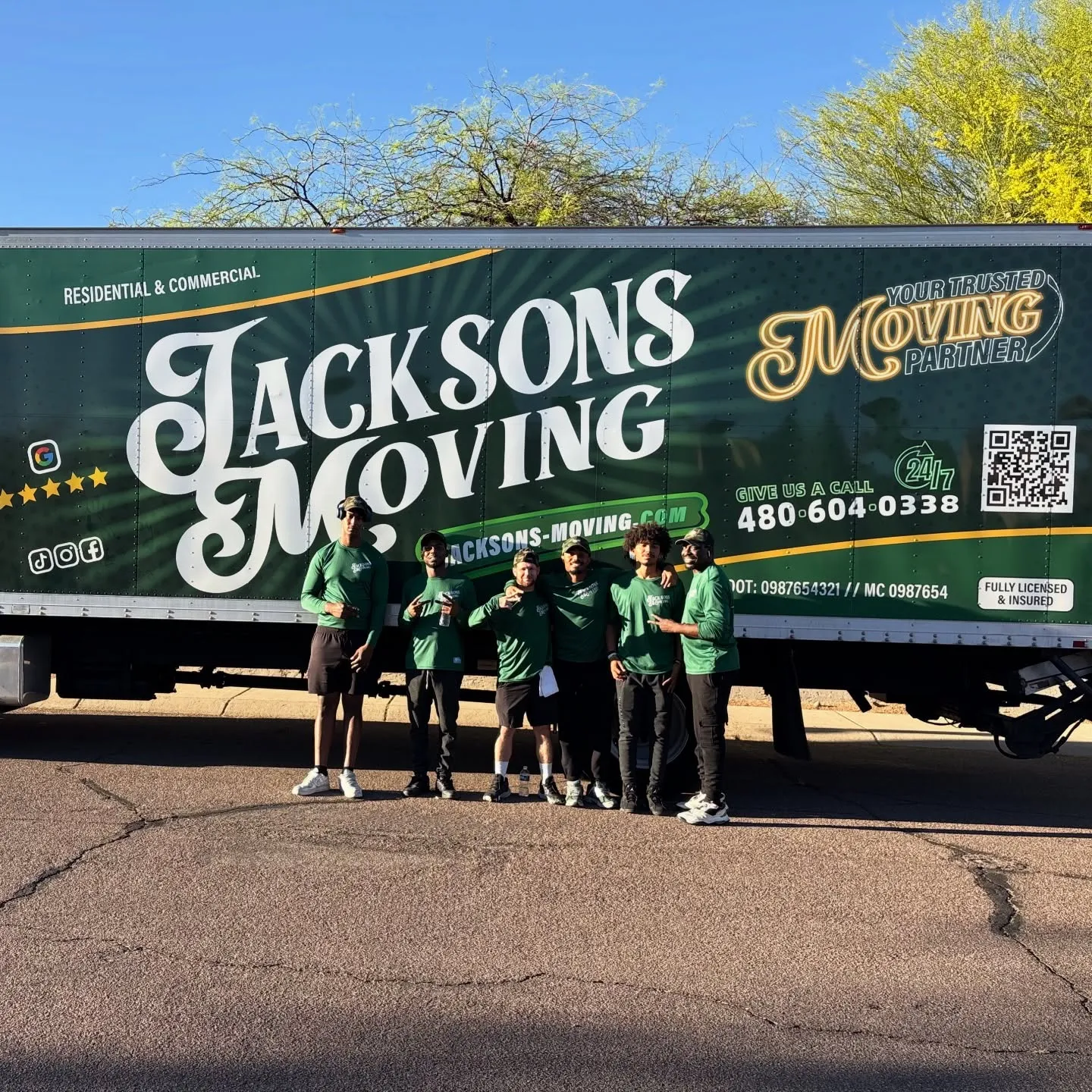
Choosing coverage for a Phoenix move comes down to one question: what would it cost to replace everything you own? Answer that honestly, then pick the valuation option that matches. Jackson's Moving is family-owned, offers transparent, straightforward pricing with no hidden charges, and is available 24/7 to answer coverage questions before you sign. Get started with Jackson's Moving and move with protection you actually understand.
GET A QUOTE
 Add jacksons-moving.com as a preferred source on Google →
Read genuine feedback from our satisfied customers to understand why we are the trusted choice for moving services.
From Phoenix to communities across the Valley, Jackson's Moving is here when you need residential, commercial, or long-distance moving services. Request your free quote today.