
Written by:
Editorial Team
Published:
November 3, 2026
Quick Summary
Moving insurance for fragile belongings usually means valuation coverage from your mover, which pays for items lost, damaged, or destroyed in transit, though it is not traditional insurance. Costs reportedly range from $215 to $2,500, averaging $515, and coverage often depends on who packed each item and whether you can document its value.
Last Updated: November 3, 2026
Fragile belongings are the most likely items to break in transit, and most homeowners assume their moving company's protection will cover them. At Jackson's Moving, we explain what moving insurance for fragile belongings actually pays for, so you can plan before moving day. Moving coverage is commonly described as valuation or mover liability protection rather than conventional insurance. According to SafeBound Moving's 2026 guide to moving valuation coverage, that protection pays for belongings that are lost, damaged, or destroyed during the move, but it is not insurance in the traditional sense.
Nationwide, moving insurance costs were reported in 2026 to range from $215 to $2,500, with an average of $515, according to Angi's 2026 moving insurance cost data. Reported costs vary with the type of coverage selected, so compare what each option actually pays before you choose.
Read the policy wording closely. Coverage for a fragile item usually depends on how it was packed, who packed it, and whether you can show what it was worth before the move.
Many customers use the terms interchangeably, but they are not always the same product. Valuation coverage is the basic protection most movers include, while separate moving insurance is an add-on that can pay more for high-value losses.
Coverage options differ in what they pay, and it is worth confirming with your mover which option applies to fragile or valuable belongings. Compare your options on our moving insurance page to see what protection is offered.
If your homeowners or renters policy already covers personal property during a move, it may be worth checking before you pay for additional coverage. Coverage limits, exclusions and whether a policy applies while items are in a mover's custody all vary, so confirm the details directly with your insurer.
Packing responsibility affects how a fragile-item claim is handled, so it is worth confirming in your contract who packs each item.
Here is how the two approaches compare across the fragile categories that generate the most claims:
Ask your mover to state in writing, item by item, who packed each fragile belonging, and keep that record with your inventory.
Our packing services can help with fragile items, so you can choose which items to have packed and which to pack yourself.
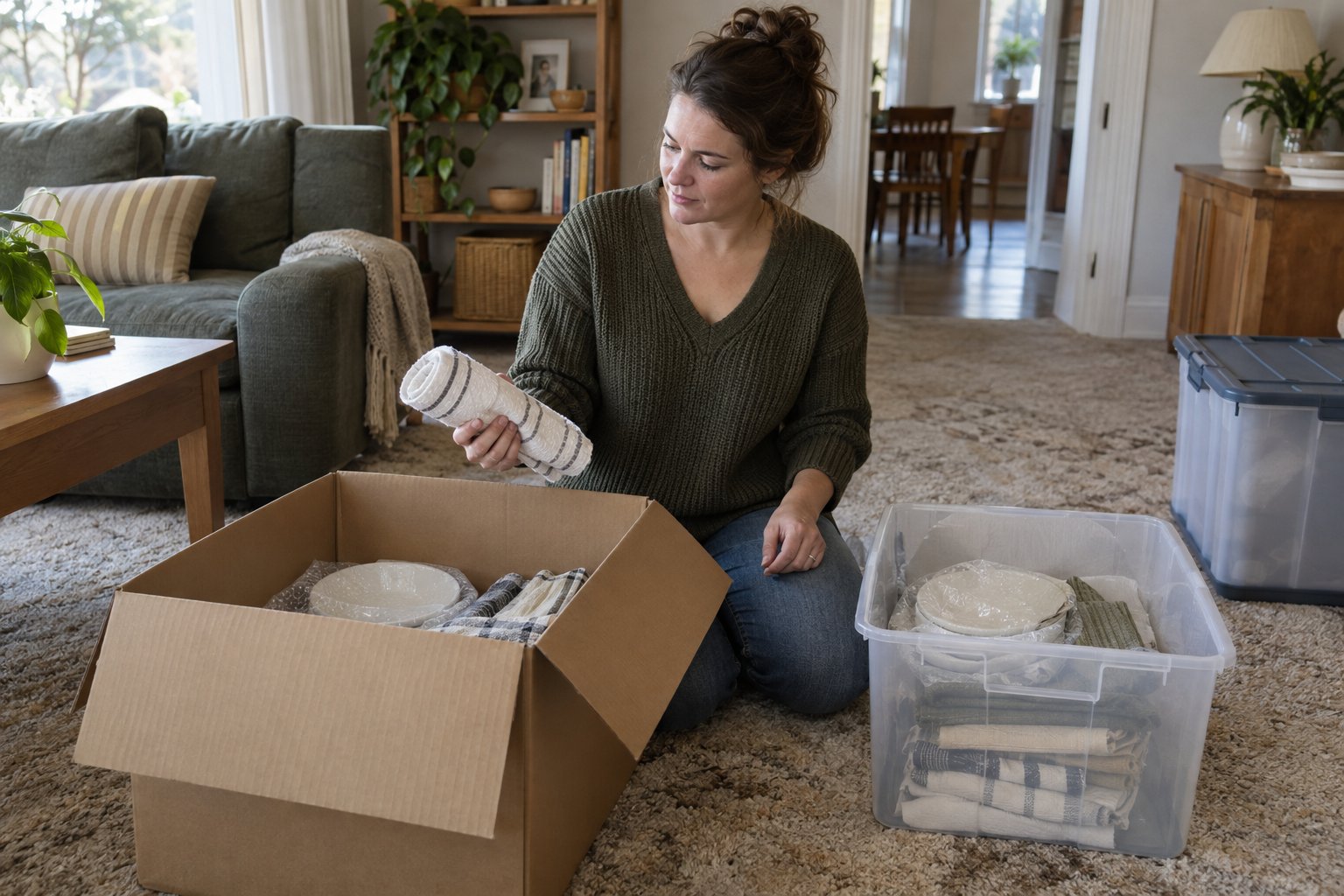
If you pack yourself, use sturdy boxes and enough cushioning on all sides. Wrap each glass or ceramic piece individually, mark boxes as fragile, and keep heavy items on the bottom. Read our full guide to packing fragile items safely for step-by-step instructions.

If you want the work done without doing it yourself, our packing services can help with fragile items, and you can choose which items you want us to take on. Explore full and partial packing options to choose what suits your move.
Documentation is what turns a damaged item into a valid claim. Before moving day, photograph each fragile or valuable item from several angles, and record its condition, serial numbers where relevant, and the price you paid or its replacement value. These records are most useful when careful handling prevents damage in the first place, so pack fragile items securely and keep their condition easy to verify.
Keep receipts, appraisals and any original packaging. Store this inventory somewhere separate from the boxes, such as a cloud folder or a printed copy in your carry-on bag.
A claim is only as strong as the evidence behind it, and the process differs depending on whether you are dealing with basic valuation or full value protection. The steps below reflect the common pattern; always confirm the exact deadlines and forms in your own contract, because they govern.
Watch out: the most common claim-killer is missing the written-notice deadline because the damage was discovered days after delivery. Put the deadline on your calendar the day you receive the contract, and photograph everything before the truck leaves.
A plain-language way to think about exclusions: accidental transit damage (a mover drops a carton, a truck is in an accident, an item is crushed in the load) is generally the kind of loss valuation protection is meant to address, while damage attributed to inadequate packing, pre-existing cracks, or normal wear is commonly excluded. If you are unsure which category your loss falls into, describe the facts in writing and ask the mover to identify the clause it is applying.
Protecting fragile belongings starts well before moving day. Confirm your coverage level, decide who will pack each fragile item, and document everything before the truck arrives. Request a quote through our website, or call (480) 604-0338 to discuss your move. Pricing depends on the size of your move, your dates, and the services you choose, so the quote will reflect your specific situation.
Moving insurance is usually described as valuation coverage or mover liability protection rather than conventional insurance. Valuation coverage generally protects belongings if they are lost, damaged, or destroyed during transit, but it is not actually insurance. The price depends on the coverage type you select. Ask any moving company to explain exactly what its plan pays for before you sign.
The amount a mover pays for loss or damage depends on the valuation option you choose, such as released value or full value protection. Coverage can also depend on who packed the items. Read the moving contract carefully and confirm the valuation option before moving day.
Some homeowners and renters policies cover personal property while it is in transit, but many do not, or they apply limits and exclusions. Check your policy wording or call your agent before the move. If your existing policy does not cover belongings in transit, you can compare valuation coverage from the mover or a separate policy. Do not assume coverage without written confirmation.
Photograph each fragile or high-value item from several angles before packing, and record its condition in writing. Keep receipts, appraisals, and proof of value where you have them. Add a simple inventory listing each item, its estimated value, and the box it is in. Good documentation makes a claim faster and helps prove the item was in good condition when it left your home.
GET A QUOTE
 Add jacksons-moving.com as a preferred source on Google →
Read genuine feedback from our satisfied customers to understand why we are the trusted choice for moving services.
From Phoenix to communities across the Valley, Jackson's Moving is here when you need residential, commercial, or long-distance moving services. Request your free quote today.